paradox
 10:43
Bertrand's Paradox (with 3blue1brown) - Numberphile
1.4M views • 4 years ago
Numberphile
Numberphile interviews Grant Sanderson of 3blue1brown about Bertrand's paradox, where different reasonable ways of picking a random chord of a circle give different probabilities.
 17:55
The Fermi Paradox: Dark Forest Theory
412K views • 7 years ago
Isaac Arthur
Isaac Arthur examines the Dark Forest theory, Cixin Liu's proposed solution to the Fermi Paradox in which civilizations stay silent and may destroy any that reveal themselves. He tests the theory's underlying assumptions and arguments.
 1:10:52
The Fermi Paradox Compendium
815K views • 10 years ago
Isaac Arthur
Isaac Arthur surveys the popular proposed solutions to the Fermi Paradox in a 71-minute compendium. He weighs the strengths and weaknesses of each argument.
 6:21
The Fermi Paradox — Where Are All The Aliens? (1/2)
35.5M views • 11 years ago
Kurzgesagt – In a Nutshell
Kurzgesagt introduces the Fermi paradox: with so many stars and planets, why do we see no sign of aliens? It sets up the question and what it might imply for our own future. It is part 1 of 2.
 24:14
The Banach–Tarski Paradox
49.1M views • 11 years ago
Vsauce
Vsauce's roughly 24 minute explainer on the Banach-Tarski paradox, building from infinity and set theory to the decomposition of a sphere into pieces that form two spheres.
 40:54
Fermi Paradox: The Dyson Dilemma v2.0
397K views • 10 years ago
Isaac Arthur
Isaac Arthur examines the Dyson Dilemma, the puzzle of why we see no Dyson spheres or megastructures if growth-oriented civilizations should build them. He covers detectability and whether such structures could hide.
 3:34
Complete Solution To The Twins Paradox
2.3M views • 10 years ago
minutephysics
A minutephysics explainer on the twins paradox in special relativity. It shows why the traveling twin ends up younger and how acceleration resolves the paradox.
 6:03
Do Your Buses Get Stuck in Traffic? (The Downs-Thomson Paradox)
693K views • 6 years ago
Not Just Bikes
Not Just Bikes explains the Downs-Thomson paradox using Amsterdam and Toronto: road widening doesn't fix congestion, and buses stuck in traffic make transit slow. It argues for giving transit its own priority infrastructure.
 15:30
The Black Hole Information Paradox
1.1M views • 8 years ago
PBS Space Time
PBS Space Time episode on the black hole information paradox, covering how black holes seem to destroy information, the no-hair conjecture and the proposed role of the event horizon. It is part of a series on black holes.
 21:14
The medical test paradox, and redesigning Bayes' rule
1.4M views • 5 years ago
3Blue1Brown
3Blue1Brown explains why positive results on accurate medical tests are often false positives, and reframes Bayes' rule using likelihood ratios (Bayes factors) to update odds. It uses visual examples to make the reasoning intuitive.
 17:35
Bell's Theorem: The Quantum Venn Diagram Paradox
8.1M views • 9 years ago
minutephysics
MinutePhysics, with 3Blue1Brown, explains Bell's theorem using a Venn diagram paradox and polarizing filters. It shows why no local hidden variable theory can reproduce quantum correlations.
 10:31
Why We Should NOT Look For Aliens - The Dark Forest
17.7M views • 4 years ago
Kurzgesagt – In a Nutshell
Kurzgesagt animated explainer on the Dark Forest answer to the Fermi Paradox. It argues that if advanced civilizations exist, staying silent may be the safest strategy because revealing yourself invites a first strike.
Topic match · Probability & game theory 8:18
Why Alien Life Would be our Doom - The Great Filter
27.9M views • 8 years ago
Kurzgesagt – In a Nutshell
A short Kurzgesagt animation explaining the Great Filter, the idea that finding alien life might be bad news because it implies something usually destroys civilizations. It connects the concept to the Fermi paradox.
 13:43
Why Quantum Information is Never Destroyed
715K views • 8 years ago
PBS Space Time
A PBS Space Time episode asking whether the universe's information can ever truly be lost, tying quantum mechanics, determinism and black holes together. It sets up the black hole information paradox.
 12:55
Humanity was born way ahead of its time. The reason is grabby aliens.
1.7M views • 5 years ago
Rational Animations
Rational Animations explains Robin Hanson's grabby aliens model, which argues that humanity looks suspiciously early in cosmic history. Expanding civilizations set a deadline that explains our timing and bears on the Fermi paradox.
 6:31
Why Your Vote Doesn't Count
7.9M views • 15 years ago
CGP Grey
CGP Grey explains first-past-the-post voting and why it pushes elections toward two dominant parties. It is the first in his series on electoral systems.
Topic match · Probability & game theory 12:04
Why Being Delusional is a Superpower
15.2M views • 6 years ago
Veritasium
Veritasium examines the role of luck in success, with simulations and examples showing how small advantages and chance can compound. It argues that top outcomes are disproportionately luck-driven while still crediting effort.
Topic match · Probability & game theory 27:19
Once you understand game theory, you understand the world.
26.5M views • 2 years ago
Veritasium
Veritasium explores the Prisoner's Dilemma and Axelrod's tournaments, showing why tit-for-tat and forgiving strategies win in repeated games. It extends the ideas to cooperation in evolution and conflict.
Topic match · Probability & game theory 4:27
The Voting System That Should Replace Every Election
4.7M views • 15 years ago
CGP Grey
A short CGP Grey explainer on the alternative vote (instant runoff voting) versus first past the post, made around the 2011 UK referendum. It shows how ranked ballots are tallied and why they avoid spoiler effects.
Topic match · Probability & game theory 39:47
How lucky is too lucky?: The Minecraft Speedrunning Dream Controversy Explained
8.4M views • 5 years ago
Stand-up Maths
Matt Parker analyzes the Minecraft speedrunning controversy in which Dream was accused of cheating via improbably lucky drops. He walks through the probability and the statistical arguments in the original accusation and the reply.
Topic match · Probability & game theory 6:18
Animated Voting Methods
16K views • 9 years ago
Unify The Vote
An animated simulation comparing single-winner voting methods such as plurality, instant runoff and STAR. Colored regions show which candidate wins as a randomized electorate shifts across a two-dimensional political space, building on Ka-Ping Yee's earlier diagrams.
Topic match · Probability & game theory 13:44
Is AI Safety a Pascal's Mugging?
388K views • 7 years ago
Robert Miles AI Safety
Robert Miles examines whether the case for AI safety is a Pascal's mugging, a tiny probability of an enormous payoff. He argues it is not, because AI risk does not depend on vanishingly small probabilities.
Topic match · Probability & game theory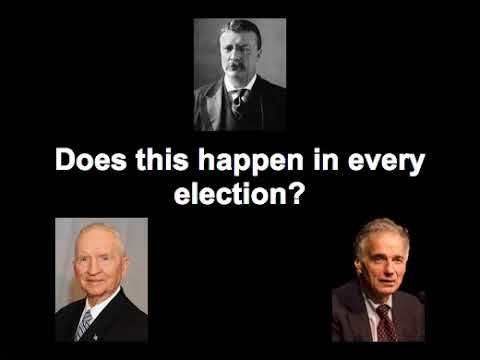 3:35
How our voting system (and IRV) betrays your favourite candidate
35K views • 12 years ago
The Center for Election Science
The Center for Election Science explains favorite betrayal in instant-runoff voting: in some elections, ranking your favorite first can cause your least favorite to win. It contrasts this with plurality voting's spoiler problem.
Topic match · Probability & game theory 13:31
Randomness is Random - Numberphile
893K views • 7 years ago
Numberphile
Numberphile with Simon Pampena on how humans misunderstand randomness, including coin-flip sequences, run lengths and the gambler's fallacy.
Topic match · Probability & game theory 4:07
Why do competitors open their stores next to one another? - Jac de Haan
7.4M views • 14 years ago
TED-Ed
A short animated TED-Ed lesson in which two competing ice cream vendors on a beach illustrate why rival shops cluster together. It introduces game theory and the Nash equilibrium through the Hotelling model.
Topic match · Probability & game theory 57:03
HACKENBUSH: a window to a new world of math
562K views • 5 years ago
Owen Maitzen
Owen Maitzen's animated hour-long introduction to Hackenbush, a simple combinatorial game, and how its strategy leads to surreal numbers and the roots of the number system.
Topic match · Probability & game theory 13:23
Simulating Green Beard Altruism
4.5M views • 5 years ago
Primer
Primer simulates green beard altruism, where individuals recognize and help others carrying a shared marker, and shows how imposters affect its evolution. It is an animated evolution simulation based on published papers.
Topic match · Probability & game theory 6:31
You Can Win the Presidency With 22% of the Vote
8.2M views • 15 years ago
CGP Grey
A short CGP Grey animation showing how the US electoral college lets a candidate win the presidency with as little as about 22 percent of the popular vote. It lays out the arithmetic of winning states by narrow margins.
Topic match · Probability & game theory 15:11
Bayes theorem, the geometry of changing beliefs
6M views • 6 years ago
3Blue1Brown
3Blue1Brown presents Bayes' theorem through a geometric diagram, showing how evidence should update beliefs. It works through the Kahneman and Tversky style questions and base rates.
Topic match · Probability & game theory 6:01
Cambridge Ideas - Professor Risk
128K views • 16 years ago
Cambridge University
David Spiegelhalter, Professor of the Public Understanding of Risk, uses statistics to weigh everyday risks such as bacon sandwiches and cycling. The six-minute piece introduces micromorts as a way to compare the risk of dying.
Topic match · Probability & game theory 23:51
Why is this number everywhere?
12.1M views • 2 years ago
Veritasium
Veritasium explores why the number 37 turns up so often, drawing on Tom Magliery's collection of 37 sightings and a poll of about 200,000 people asked to pick a random number. It covers how humans choose numbers and why 37 stands out.
Topic match · Probability & game theory 2:52
If money was no object, should you run every medical test?
263K views • 8 years ago
Medlife Crisis
A doctor from Medlife Crisis explains in under three minutes why even a rich patient should not simply order every medical test, touching on pre-test probability and Bayesian reasoning. False positives make blanket testing counterproductive.
Topic match · Probability & game theory 19:31
Math Magic
14M views • 10 years ago
Vsauce
Vsauce explores math through card tricks and big numbers, including an animation of how enormous 52 factorial, the number of deck orderings, really is.
Topic match · Probability & game theory 10:37
The Bayesian Trap
4.5M views • 9 years ago
Veritasium
Veritasium explains Bayes' theorem with examples and introduces the 'Bayesian trap', where repeated events get mistaken for inevitable ones. It discusses how priors shape our expectations and behavior.
Topic match · Probability & game theory 6:23
How We Should Vote (Range Voting)
43K views • 10 years ago
Undefined Behavior
A six-minute explainer from Undefined Behavior on range (score) voting. It follows an earlier video on Arrow's Theorem and shows how range voting seems to satisfy the criteria Arrow's Theorem says no ranked system can.
Topic match · Probability & game theory 14:03
Simulating alternate voting systems
4.5M views • 6 years ago
Primer
Primer uses simulations to compare voting systems such as first-past-the-post, approval, ranked choice and others. It shows how each system behaves and can be manipulated, with links to further voting theory resources.
Topic match · Probability & game theory 3:59
The Lava Lamps That Help Keep The Internet Secure
4.3M views • 9 years ago
Tom Scott
Tom Scott visits Cloudflare's San Francisco office to show the wall of lava lamps whose camera feed is used as a source of entropy for random number generation. It is a short explainer on how this helps secure internet encryption.
Topic match · Probability & game theory 32:11
Darts in Higher Dimensions (with 3blue1brown) - Numberphile
2.1M views • 6 years ago
Numberphile
Numberphile talks with Grant Sanderson of 3Blue1Brown about a darts puzzle with a shrinking bullseye. Solving it takes the volumes of high-dimensional spheres, and the answer turns up Euler's number.
Topic match · Probability & game theory 11:39
The Unbeatable Game from the 60s: Dr NIM
7.2M views • 10 years ago
Stand-up Maths
Matt Parker of Stand-up Maths explains single-pile Nim and the trick that wins it, using Dr NIM, a 1960s mechanical plastic computer that plays perfectly. He teaches the strategy so viewers can beat friends.
Topic match · Probability & game theory 10:26
Crowd Wisdom Principles
11K views • 4 years ago
Hypermind
A ten-minute explainer from Hypermind on the wisdom of crowds, covering Galton's discovery and the diversity theorem. It argues that collective intelligence comes from diversity, independence and aggregation.
Topic match · Probability & game theory