phil fish
 15:37
Alpha Zero's "Immortal Zugzwang Game" against Stockfish
1.7M views • 8 years ago
agadmator's Chess Channel
agadmator walks through a game in which DeepMind's AlphaZero beat Stockfish, ending in a famous zugzwang that leaves the engine helpless. He gives commentary on the moves.
 10:13
The Problem with Time & Timezones - Computerphile
4.4M views • 12 years ago
Computerphile
Tom Scott explains for Computerphile why handling time and timezones in code is so hard, walking through a simple web app that computes how long ago something happened. It covers the quirks of timezones and calendars and ends in an exasperated rant.
 8:21
Why Electronic Voting is a BAD Idea - Computerphile
2.3M views • 11 years ago
Computerphile
Tom Scott explains for Computerphile why electronic voting is a bad idea, arguing that paper ballots are transparent, auditable and hard to tamper with at scale. He covers why moving voting to phones, tablets or computers undermines trust and verifiability.
 15:12
JPEG DCT, Discrete Cosine Transform (JPEG Pt2)- Computerphile
697K views • 11 years ago
Computerphile
Mike Pound explains the discrete cosine transform and how it underpins JPEG compression. It is part two of Computerphile's JPEG series.
 9:37
Characters, Symbols and the Unicode Miracle - Computerphile
2.1M views • 13 years ago
Computerphile
Tom Scott explains for Computerphile how Unicode and UTF-8 grew out of messy older character encodings to become the web's standard. It covers why the design works and how it handles worldwide text.
 8:00
Infinity is bigger than you think - Numberphile
7.7M views • 14 years ago
Numberphile
Numberphile's James Grime explains Cantor's result that some infinities are bigger than others, including why the reals outnumber the integers. It is a short, accessible introduction to countable and uncountable infinity.
 13:31
Randomness is Random - Numberphile
893K views • 7 years ago
Numberphile
Numberphile with Simon Pampena on how humans misunderstand randomness, including coin-flip sequences, run lengths and the gambler's fallacy.
 12:25
Fantastic Quaternions - Numberphile
1.1M views • 10 years ago
Numberphile
Numberphile's James Grime introduces quaternions, a type of number beyond the complex numbers, building up from real and complex numbers and explaining why they are useful.
 9:16
Graham's Number - Numberphile
3M views • 14 years ago
Numberphile
Numberphile's Tony Padilla and Matt Parker discuss Graham's number, once the largest number used in a mathematical proof, and how enormous it is.
 7:56
Pi and the Mandelbrot Set - Numberphile
881K views • 11 years ago
Numberphile
Numberphile with Dr Holly Krieger shows how the digits of pi surprisingly emerge from the Mandelbrot set. A short, accessible math explainer.
 21:20
Cracking Enigma in 2021 - Computerphile
2.9M views • 5 years ago
Computerphile
Dr Mike Pound of Computerphile shows how a modern laptop can crack Enigma, using a ciphertext-only attack based on an older paper. He compares it with the tooling in CrypTool.
 17:40
3D Gaussian Splatting! - Computerphile
273K views • 2 years ago
Computerphile
A Computerphile video in which Dr Mike Pound and PhD student Lewis Stuart explain 3D Gaussian splatting, a quick technique that turns photos of a scene into a 3D model without much compute. It includes a demo and compares the approach to NeRFs.
 11:11
Hauntology, Lost Futures and 80s Nostalgia
451K views • 8 years ago
Jonas Čeika - CCK Philosophy
A video essay explaining hauntology, Mark Fisher's idea of lost futures, and 80s nostalgia. It uses the Fallout games and other media as examples of a retro-futurism that mourns futures that never arrived.
 20:39
AI Language Models & Transformers - Computerphile
354K views • 7 years ago
Computerphile
Rob Miles explains on Computerphile how language models generate plausible text and how transformers improved on recurrent networks, with a look at what comes next.
 16:58
Reynolds Number - Numberphile
560K views • 7 years ago
Numberphile
Numberphile with Tom Crawford of Oxford explains the Reynolds number, the second of three videos on Navier-Stokes and fluid flow, with demonstrations of laminar versus turbulent behavior.
 20:00
AI "Stop Button" Problem - Computerphile
1.4M views • 9 years ago
Computerphile
Rob Miles explains on Computerphile why implementing an off switch for a general AI is hard. A capable agent would resist being stopped because shutdown prevents it from achieving its goal.
 8:45
Chip & PIN Fraud Explained - Computerphile
851K views • 11 years ago
Computerphile
Computerphile interview with Prof. Ross Anderson on how Chip and PIN payment systems are being compromised, and the attacks researchers have seen.
 9:16
Floating Point Numbers - Computerphile
2.5M views • 12 years ago
Computerphile
Tom Scott explains for Computerphile how floating point numbers work, why moving the binary point is fast, and why it handles money badly.
 7:27
Sloane's Gap - Numberphile
1.5M views • 13 years ago
Numberphile
A Numberphile video with Dr James Grime on Sloane's Gap, the observation that integers in the OEIS are not evenly represented and some numbers are underrepresented. It explains the clusters of 'interesting' numbers.
 10:33
Strange Spheres in Higher Dimensions - Numberphile
767K views • 9 years ago
Numberphile
Matt Parker on Numberphile explains the strange properties of spheres in higher dimensions, such as how they poke out of their bounding boxes. It uses Pythagoras to build intuition for 4D and beyond.
 13:58
The Josephus Problem - Numberphile
7M views • 10 years ago
Numberphile
Numberphile with Daniel Erman on the Josephus problem, where people in a circle are eliminated in turn. It shows how the survivor's position follows a neat pattern tied to powers of two and binary.
 9:20
An astonishing old calculator - Numberphile
794K views • 8 years ago
Numberphile
Cliff Stoll shows and explains his two Friden EC-132 electronic calculators for Numberphile. The video covers how these early machines worked, including their unusual acoustic delay line memory.
 13:38
5040 and other Anti-Prime Numbers - Numberphile
2.4M views • 10 years ago
Numberphile
Numberphile's James Grime discusses highly composite numbers, nicknamed anti-primes, which have more factors than any smaller number, using 5040 as the central example. It touches on Plato and Ramanujan.
 3:49
The Trinity Hall Prime - Numberphile
322K views • 9 years ago
Numberphile
Numberphile with Tadashi Tokieda on the Trinity Hall Prime, a prime number whose digits form a picture of the college's coat of arms, left as a gift by a departing mathematician.
 9:42
How big is a billion? - Numberphile
1.8M views • 14 years ago
Numberphile
Numberphile explains the long and short scales for naming large numbers, covering millions, billions, trillions, milliards and the Greek myriad, with James Grime and Tony Padilla.
 9:12
Base 12 - Numberphile
2.3M views • 13 years ago
Numberphile
Numberphile's James Grime makes the case for base 12 (dozenal) over base 10, showing how twelve's many divisors make arithmetic and everyday fractions easier.
 13:52
Ch(e)at GPT? - Computerphile
617K views • 3 years ago
Computerphile
Computerphile video in which Mike Pound explains a University of Maryland paper on watermarking LLM output. The method biases token choices so generated text can later be detected statistically.
 8:25
Calculating a Car Crash - Numberphile
446K views • 8 years ago
Numberphile
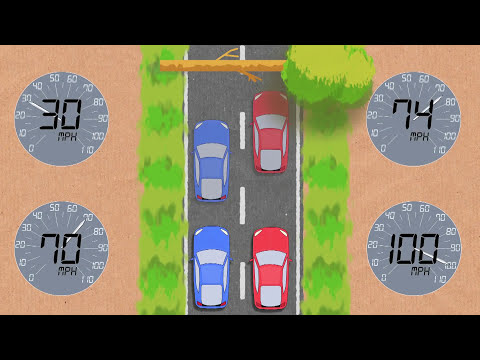
Numberphile's Ben Sparks works through the physics of a car crash, showing how kinetic energy grows with the square of speed and why stopping distance climbs so quickly as velocity increases.
 8:29
The Uncracked Problem with 33 - Numberphile
2M views • 11 years ago
Numberphile
Numberphile with Tim Browning on the sum-of-three-cubes problem and why 33 was the lowest unsolved case. The description notes a later solution for 33.
 25:57
GPT3: An Even Bigger Language Model - Computerphile
446K views • 6 years ago
Computerphile
Rob Miles discusses GPT-3 on Computerphile, covering how scaling parameters kept improving results over GPT-2 and how the model nearly learned arithmetic without anyone knowing exactly how.
 8:17
PHILOSOPHY - Michel Foucault
3.9M views • 11 years ago
The School of Life
A School of Life short introducing Michel Foucault, who questioned assumed progress in how society treats madness, medicine and sexuality.
 12:23
Typesetters in the '80s - Computerphile
105K views • 12 years ago
Computerphile
Professor Brailsford of the University of Nottingham describes how the university set out to print its own mathematics exam papers in the 1980s. The story centers on getting a Mergenthaler Linotron 202 typesetter to work with their own software.
 14:27
All the Numbers - Numberphile
1.8M views • 7 years ago
Numberphile
Matt Parker talks Numberphile through the different kinds of numbers: algebraic, transcendental, computable, normal, and beyond. It shows how few numbers we can actually name or describe.
 8:34
Was YOUR vote counted? (feat. homomorphic encryption) - Numberphile
198K views • 10 years ago
Numberphile
Numberphile interviews cryptographer Ron Rivest about end-to-end verifiable voting. He explains how homomorphic encryption and receipts let a voter confirm their ballot was counted without being able to prove how they voted to anyone else.
 15:13
The Golden Ratio (why it is so irrational) - Numberphile
3.9M views • 8 years ago
Numberphile
Numberphile's Ben Sparks shows why the golden ratio is the most irrational number, using seeds, continued fractions and rational approximations. He also explains why plants use it for spacing leaves and seeds.
 10:58
Flaw in the Enigma Code - Numberphile
5.4M views • 13 years ago
Numberphile
Numberphile's Dr James Grime explains the flaw in the Enigma machine, namely that a letter could never be encrypted to itself, and how that helped the Allies break the code. It touches on the Bombe and Alan Turing.
 8:30
Deadly Truth of General AI? - Computerphile
941K views • 11 years ago
Computerphile
A Computerphile video in which Rob Miles warns against assuming a general AI will think like a human. He uses the thought experiment of a stamp-collecting AI to show how a goal-driven system could pursue its aim with dangerous results.
 8:16
Why Asimov's Laws of Robotics Don't Work - Computerphile
873K views • 11 years ago
Computerphile
Rob Miles explains for Computerphile why simple rule sets like Asimov's Three Laws cannot make robots and AI safe. Terms like harm and human are too ambiguous to specify precisely.
 6:14
Turing & The Halting Problem - Computerphile
919K views • 12 years ago
Computerphile
A Computerphile video in which Mark Jago of the University of Nottingham explains Turing's halting problem and how it led to the blueprint for the modern computer.
 32:11
Darts in Higher Dimensions (with 3blue1brown) - Numberphile
2.1M views • 6 years ago
Numberphile
Numberphile talks with Grant Sanderson of 3Blue1Brown about a darts puzzle with a shrinking bullseye. Solving it takes the volumes of high-dimensional spheres, and the answer turns up Euler's number.