physics simulation
 5:26
Neural Network Learns The Physics of Fluids and Smoke | Two Minute Papers #118
209K views • 9 years ago
Two Minute Papers
Two Minute Papers covers a paper on speeding up fluid and smoke simulation with convolutional networks. It contrasts the approach with earlier regression forest methods.
 2:00:59
Is the Universe a Simulation? | 2016 Isaac Asimov Memorial Debate
5.9M views • 10 years ago
American Museum of Natural History
The 2016 Isaac Asimov Memorial Debate, moderated by Neil deGrasse Tyson, in which a panel of physicists and philosophers debates whether the universe is a simulation. Participants include David Chalmers, Zohreh Davoudi and James Gates.
 0:31
ants simulation
2K views • 12 years ago
Hugh Lomas
A one-minute visualization of a simulated ant colony in which ants follow pheromone trails, with the source code on GitHub. It shows emergent behavior arising from simple rules.
 4:09
Evolved Virtual Creatures (1994)
43K views • 6 years ago
karlsims
A restored 1994 video of Karl Sims' research on evolved virtual creatures, where simulated block creatures are bred through artificial evolution to swim, walk, follow and compete. It is a landmark demonstration of genetic algorithms in physics simulation.
Topic match · Computer graphics & rendering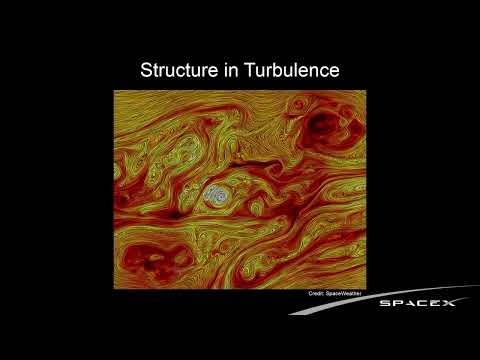 46:37
GPUs to Mars: Full-Scale Simulation of SpaceX's Mars Rocket Engine
126K views • 11 years ago
insideHPC Report
SpaceX engineers present at NVIDIA's GPU Technology Conference on a multi-physics code that simulates the full-scale Raptor methane engine. It covers GPU-based turbulent combustion modeling with adaptive grids and wavelet compression.
 55:59
Jailbreaking the Simulation with George Hotz | SXSW 2019
573K views • 7 years ago
SXSW
George Hotz gives a SXSW 2019 talk on the idea that we live in a simulation and asks what actions would be available from inside it. He takes a hacker's view of whether it could be escaped.
 23:28
Nick Bostrom - The Simulation Argument (Full)
615K views • 13 years ago
Science, Technology & the Future
An interview with Nick Bostrom at Oxford's Future of Humanity Institute presenting his simulation argument: at least one of three propositions about posthuman civilizations and ancestor simulations must be true.
 1:20:35
Anton: A Special-Purpose Machine That Achieves a Hundred-Fold Speedup in Biomolecular Simulations
12K views • 14 years ago
NC State
David Shaw of D. E. Shaw Research presents Anton, a special-purpose machine that speeds up biomolecular simulations about a hundred-fold. The lecture covers molecular dynamics and how simulation helps understand how drugs bind.
 3:58
Marble Marcher - A Fractal Physics Game
1.7M views • 7 years ago
CodeParade
A demo of Marble Marcher, a game using a fractal physics engine and fully procedural ray-marched rendering. The player rolls a marble through shifting fractal levels.
 54:54
The Physics and Philosophy of Time - with Carlo Rovelli
1.4M views • 8 years ago
The Royal Institution
Physicist Carlo Rovelli gives a public lecture at the Royal Institution on how our understanding of time has changed, from Boltzmann and Einstein to quantum theory and loop quantum gravity. He blends physics, philosophy and art to argue that time is stranger than everyday intuition suggests.
 54:47
Social Physics: How Good Ideas Spread | Sandy Pentland | Talks at Google
53K views • 12 years ago
Talks at Google
Sandy Pentland of MIT presents his book on social physics, which uses big-data studies of how people interact to explain how ideas spread. He describes findings on collective intelligence and social influence.
 51:46
Connections between physics and deep learning
67K views • 10 years ago
MITCBMM
Max Tegmark's MIT CBMM talk on why deep learning works so well. He argues that the laws of physics and the symmetries in physical data make it compressible into small neural networks, tying physics to network structure.
 4:46
Discovery Channel - Large Asteroid Impact Simulation
64.8M views • 15 years ago
Anselmo La Manna
A Discovery Channel computer simulation of a large asteroid impact on Earth, showing the scale of the devastation. It sits in a broader context of early Earth impacts and the moon-forming collision.
 5:21
Flexible Muscle-Based Locomotion for Bipedal Creatures
1.9M views • 12 years ago
Goatstream
A 2013 research demo of simulated bipedal creatures whose natural gaits are found by optimizing muscle-based controllers, with no motion capture or keyframe animation. It shows physics-based walking and running emerging from musculoskeletal models.
Topic match · Computer graphics & rendering 1:47
The Counterintuitive Physics of Turning a Bike
855K views • 11 years ago
minutephysics
A two-minute minutephysics video explaining why turning a bicycle requires first steering briefly the other way. It covers counter-steering and balance with slow-motion footage and 3D animation.
 40:20
"Testing Distributed Systems w/ Deterministic Simulation" by Will Wilson
55K views • 12 years ago
Strange Loop Conference
Will Wilson of FoundationDB explains how the team tested their distributed database using deterministic simulation. By running the whole system in a simulator with injected faults and reproducible seeds, they could find rare concurrency and network bugs.
 7:23
How Trees Bend the Laws of Physics
5M views • 14 years ago
Veritasium
Veritasium explains how trees lift water from roots to the top of tall trunks, using transpiration pull and the negative pressure that liquid water can sustain. It explains why trees do not need pumps or valves.
 1:06:21
David Deutsch on Physics Without Probability
38K views • 11 years ago
Simon Benjamin
A 2015 talk by David Deutsch with slides and audio about constructor theory and how physics, in particular the many-worlds interpretation, can be framed without probability.
 13:41
The Physics of Life (ft. It's Okay to be Smart & PBS Eons!)
771K views • 8 years ago
PBS Space Time
PBS Space Time, together with It's Okay to be Smart and PBS Eons, asks how a universe drifting toward disorder produced something as complex as life. It presents the idea that the laws of physics, through thermodynamics, may actually favor the emergence of life.
 22:59
Terry Davis Demos SimStructure (2016-08-25)
762K views • 8 years ago
TheChristIsKing
Terry Davis, author of TempleOS, demonstrates his SimStructure physics simulator and builds a PID controller using math from Numerical Recipes in C. The description notes PID controllers are used in everything from rockets to espresso machines.
 14:34
Visualization of Quantum Physics (Quantum Mechanics)
2.8M views • 9 years ago
udiprod
An animated visualization of basic quantum mechanics using a free particle, with simulations based on the actual equations. It covers waves, particles, and how measurement collapses the wavefunction.
 1:37:55
Particles, Fields and The Future of Physics - A Lecture by Sean Carroll
1.8M views • 13 years ago
Fermilab
Sean Carroll's 2013 Fermilab Users Meeting lecture on particles, fields and the future of particle physics. He explains that particles are vibrations in underlying quantum fields and touches on the Higgs, neutrinos and dark matter.
 6:26
Slow Motion Flipping Cat Physics | Smarter Every Day 58
11.3M views • 14 years ago
SmarterEveryDay
Destin of Smarter Every Day films a cat falling in high-speed slow motion to show how cats right themselves in midair, and introduces the physics behind it.
 28:47
Episode 1: Introduction - The Mechanical Universe
503K views • 9 years ago
caltech
The first episode of Caltech's The Mechanical Universe, a 52-part introductory university physics series. David Goodstein introduces ideas from Copernicus to Newton, linking the physics of the heavens and the earth with computer animation.
 9:47
Feynman: Mathematicians versus Physicists
882K views • 14 years ago
TehPhysicalist
A ten-minute clip of Richard Feynman describing how mathematicians and physicists differ in their interests and customs. He argues physics rests on visualizing and applying math rather than pure abstraction.
 55:55
Richard Feynman - The.Character.of.Physical.Law - Part 2 (full version)
638K views • 15 years ago
Tinkerin' Thinkers
Part 2 of Richard Feynman's Messenger Lectures at Cornell, The Character of Physical Law, on the relation of mathematics to physics. He explains why understanding nature requires mathematics.
 3:09
ASCII fluid dynamics -- IOCCC2012 endoh1.c
1.7M views • 12 years ago
Yusuke Endoh
A 3-minute demo of a tiny IOCCC 2012 winning C program that simulates fluid dynamics in an 80x25 terminal, using any text (including its own source) as input. The video shows the simulation running to Handel's Water Music.
Topic match · Computer graphics & rendering 56:04
Richard Feynman Messenger Lectures at Cornell The Character of Physical Law Part 1 The Law of Gravitation
163K views • 14 years ago
TalkReelTV
The first of Richard Feynman's 1964 Messenger Lectures at Cornell, 'The Character of Physical Law', covering the law of gravitation. Feynman traces the history from Kepler and Newton to the universality of the inverse-square law. The recording is an older one with weak audio.
 4:14
Computer Color is Broken
4.3M views • 11 years ago
minutephysics
MinutePhysics explains that computers store brightness nonlinearly, so blurring and blending colors in raw RGB gives wrong, dark results. It shows why mixed colors, such as in gradients, look off.
Topic match · Computer graphics & rendering 16:01
How life emerges from a simple particle motion law: Introducing the Primordial Particle System
497K views • 9 years ago
Artificial Life Lab Graz
Researchers from the Artificial Life Lab Graz introduce the Primordial Particle System, where a simple motion law for self-propelled particles produces cell-like structures that self-reproduce and show life cycles.
Topic match · Computer graphics & rendering 3:12
Why is the Solar System Flat?
9.5M views • 12 years ago
minutephysics
A minutephysics explainer on why the planets orbit in a flat plane. It shows how conserved angular momentum flattens a collapsing cloud of matter into a disk.
 4:20
Why It's Impossible to Tune a Piano
4.1M views • 11 years ago
minutephysics
A minutephysics video explaining why a piano cannot be perfectly tuned, comparing equal temperament with just intonation and the math of harmonics.
 3:34
Complete Solution To The Twins Paradox
2.3M views • 10 years ago
minutephysics
A minutephysics explainer on the twins paradox in special relativity. It shows why the traveling twin ends up younger and how acceleration resolves the paradox.
 3:57
How Do Bikes Stay Up?
1.7M views • 11 years ago
minutephysics
A short minutephysics video explaining why bicycles stay upright. It looks at gyroscopic precession, head angle and centre of mass, and shows that bikes self-steer toward the direction they lean.
 12:32
Protecting Privacy with MATH (Collab with the Census)
451K views • 7 years ago
minutephysics
minutephysics, in collaboration with the US Census Bureau, explains differential privacy and why the 2020 census adds noise to protect individuals' data. It walks through how statistics can leak private information.
 6:22
The Unreasonable Efficiency of Black Holes
4.5M views • 8 years ago
minutephysics
Minutephysics compares how efficiently different processes convert mass to energy per E=mc^2, from fire and fission to fusion, antimatter and black holes, which can convert a large fraction of mass to energy.
 3:13
Hitting the Sun is HARD
3M views • 10 years ago
minutephysics
A three-minute minutephysics video on the orbital mechanics of why crashing into the Sun takes far more energy than leaving the solar system.
 4:03
Crazy pool vortex
14.1M views • 11 years ago
Physics Girl
Physics Girl shows a vortex phenomenon (a falaco soliton) that can be reproduced in a pool on a sunny day. Two vortices are created with plates and made visible with food coloring.
 32:02
Autonomous Testing and the Future of Software Development - Will Wilson
7K views • 7 years ago
The Linux Foundation
Will Wilson explains autonomous testing: using deterministic simulation and fuzzing, building on FoundationDB's approach, to test software continuously. It sets out the ideas behind his later company Antithesis.
 1:46:33
Lecture 1 | The Theoretical Minimum
969K views • 14 years ago
Stanford
Leonard Susskind opens Stanford Continuing Studies' Theoretical Minimum series with an introduction to quantum mechanics, a course for people who want real physics rather than popularization. It assumes some calculus and linear algebra.