red teaming
 1:22:58
OpenAI's GPT-4 Discussion with Red Teamer Nathan Labenz and Erik Torenberg
25K views • 3 years ago
Cognitive Revolution "How AI Changes Everything"
A podcast episode in which GPT-4 red teamer Nathan Labenz describes using the model before release, finding it human-level but not human-like, and discussing its weaknesses and worrying capabilities. It closes with speculation about GPT-5.
 3:51
Reddit.com co-Founder Alexis Ohanian fires back at CNN and Anderson Cooper
28K views • 15 years ago
tjandthetux
Reddit co-founder Alexis Ohanian responds in a short interview to Anderson Cooper's on-air criticism of Reddit over child exploitation content.
 16:34
Steve Huffman (Reddit) | TNW Conference | Inside the Biggest Online Community
18K views • 10 years ago
TNW
A fireside chat at TNW Conference where Reddit CEO Steve Huffman discusses Reddit's growth, user engagement and monetisation plans.
 52:31
Wired Interviews Bill Gates 1996
61K views • 8 years ago
Kevin Kelly
Unreleased 1996 footage of the Wired editors interviewing Bill Gates when he visited their office. Gates talks about software, the internet and Microsoft's thinking at the time. The video is about 53 minutes long.
 8:15
8/28/2006 Peter Schiff On Kudlow & Co: Predicts The US Economic Collapse
560K views • 18 years ago
PhilDeCarolis
A 2006 television appearance in which Peter Schiff warns on Kudlow & Co about the housing bubble and an approaching US economic collapse.
 11:52
Gregory Chaitin - Is Mathematics Invented or Discovered?
54K views • 7 years ago
Closer To Truth
Gregory Chaitin is interviewed on Closer To Truth about whether mathematics is invented or discovered. He gives a nuanced view that ties the question to the nature of reality.
 27:26
reddit.com Interviews Peter Norvig
47K views • 16 years ago
Reddit
Peter Norvig answers the top questions submitted by reddit users in a 27-minute interview. Topics include programming language choice, AI, and workplace design.
 9:25
Former CIA Operative Explains How Spies Use Disguises | WIRED
17.4M views • 8 years ago
WIRED
Jonna Mendez, former CIA Chief of Disguise, explains how disguises are used in intelligence work and what makes deception effective, including changing one's gait.
 8:35
Carl Icahn: "I Fired 12 Floors of People"
1.3M views • 7 years ago
Investor Talk
A short clip in which Carl Icahn tells the story of his first activist investment and of firing 12 floors of people, arguing activism need not be short term.
 47:41
Ilya Sutskever (OpenAI Chief Scientist) — Why next-token prediction could surpass human intelligence
789K views • 3 years ago
Dwarkesh Patel
Dwarkesh Patel interviews OpenAI chief scientist Ilya Sutskever on time to AGI, what comes after generative models, data limits, alignment, and competing with Google. The title centers on whether next-token prediction could surpass human intelligence.
 3:38:43
Stephen Wolfram: Complexity and the Fabric of Reality | Lex Fridman Podcast #234
4.8M views • 5 years ago
Lex Fridman
A long Lex Fridman interview with Stephen Wolfram on complexity, cellular automata, computational irreducibility and the Wolfram Physics Project.
 2:39:15
Jim Keller: The Future of Computing, AI, Life, and Consciousness | Lex Fridman Podcast #162
1.3M views • 5 years ago
Lex Fridman
Lex Fridman interviews chip architect Jim Keller about the future of computing, AI, life and consciousness. Topics include CPU design, branch prediction and why imperfect designs often win.
 31:31
Blink Questions Answered
35K views • 13 years ago
Google for Developers
A Google Developers Q&A in which Blink engineering leads and the PM answer the community's top questions about the new Blink rendering engine forked from WebKit.
 1:25:11
David Foster Wallace unedited interview (2003)
1.2M views • 7 years ago
Manufacturing Intellect
The full unedited 2003 ZDF television interview with David Foster Wallace, running about an hour and a half. He talks about literature, boredom, silence, television and what stories do.
 7:24
How Gamers Killed Ultima Online's Virtual Ecology | War Stories | Ars Technica
3.2M views • 8 years ago
Ars Technica
An Ars Technica War Stories episode in which Richard Garriott and Starr Long describe Ultima Online's planned virtual ecology and how players wrecked it. Players slaughtered the animals and also broke the in-game economy.
 2:18:45
Michael Levin: Consciousness, Biology, Universal Mind, Emergence, Cancer Research
237K views • 2 years ago
Curt Jaimungal
Curt Jaimungal interviews biologist Michael Levin of Tufts about consciousness, bioelectricity, emergence, and cancer research. The conversation challenges reductionist views of life.
 1:03:51
VCF East: Ken Thompson interviewed by Brian Kernighan
417K views • 7 years ago
Vintage Computer Federation
Brian Kernighan interviews Unix co-creator Ken Thompson at VCF East 2019. Thompson recounts how he was hired at Bell Labs, writing the Unix kernel in about three weeks, the origins of B and TMG, pipes, and other anecdotes.
 4:43
Richard Feynman Fire
758K views • 17 years ago
nebulajr
A short clip from a Richard Feynman interview in which he explains fire, describing how burning wood releases sunlight stored by the tree, which built itself mostly from air. It showcases his curiosity and plain-spoken explanations.
 1:06:50
HD Feynman: FUN TO IMAGINE complete (with optional Chinese subtitles)
712K views • 6 years ago
Christopher Sykes
A restored HD upload of the 1983 BBC series Fun to Imagine, in which Richard Feynman talks informally about everyday science. Topics include jiggling atoms, fire, rubber bands, magnets, electricity, mirrors, seeing, big numbers and ways of thinking.
 1:21:29
FULL INTERVIEW with Yuri Bezmenov: The Four Stages of Ideological Subversion (1984)
1.2M views • 6 years ago
Nicholas Marshall
The full 1984 interview with Yuri Bezmenov, a former KGB operative, in which he lays out four stages of ideological subversion. It is a long interview with G. Edward Griffin.
 7:33
Richard Feynman. Why.
5.5M views • 14 years ago
firewalker
A short clip of Richard Feynman answering an interviewer's question about why magnets repel, explaining that a 'why' question depends on a shared framework of understanding. It illustrates how hard it is to explain fundamentals to a layperson.
 43:14
Anders Hejlsberg and Lars Bak: TypeScript, JavaScript, and Dart
14K views • 13 years ago
DartlangTV
A Channel 9 conversation recorded at GOTO 2012 between Anders Hejlsberg (TypeScript) and Lars Bak (Dart). They discuss the two languages and different approaches to making JavaScript development safer, including runtime type checking.
 1:50:18
Dr. Bill Harris on the Omega-3 Index: Increasing Omega-3 to Promote Longevity & Transform Health
540K views • 4 years ago
FoundMyFitness
Rhonda Patrick interviews Dr. Bill Harris, co-inventor of the Omega-3 Index and author of more than 300 papers on fatty acids. They cover EPA and DHA dosing, fish oil studies such as REDUCE-IT, and how omega-3 levels relate to health and longevity.
 3:19
Steve Jobs on privacy, Steve Jobs at the D8 Conference (Video)
172K views • 16 years ago
iwasjojo
A short clip of Steve Jobs at the 2010 D8 conference, interviewed by Walt Mossberg, defining privacy as people knowing what they are signing up for, in plain English and repeatedly. The discussion centered on location data.
 7:33
Richard Feynman Magnets
999K views • 17 years ago
nebulajr
A short clip of Richard Feynman answering an interviewer's question about how magnets work, in which he explains why a why-question has no simple answer without a shared frame of reference.
 56:26
Charlie Rose: Sir James Goldsmith Interview - 15.11.94
202K views • 11 years ago
Sir James Goldsmith
Charlie Rose interviews Sir James Goldsmith in 1994 about the coming GATT free-trade agreement. Goldsmith predicts that global capital mobility will upset the balance between capital and labor.
 1:55
Ira Glass on the Creative Process (www.getoutthebox.org)
1.9M views • 15 years ago
Getoutthebox1
A two-minute video of Ira Glass on the creative process, describing the gap between taste and skill when starting out and urging you to keep producing until your work matches your taste.
 1:43:17
Yanis Varoufakis with Professor Noam Chomsky at NYPL, April 16, 2016 | DiEM25
977K views • 10 years ago
DiEM25
Yanis Varoufakis and Noam Chomsky talk on stage at the New York Public Library in 2016. They cover the Greek financial crisis, European politics, neoliberalism and America's economic future, drawing on Varoufakis's book.
 19:33
Elon Musk : How to Build the Future
2.5M views • 10 years ago
Y Combinator
A 20-minute Y Combinator interview in which Sam Altman asks Elon Musk how to build the future. Topics include which problems a 22-year-old should work on, such as AI, genetics, and brain interfaces, and general advice for founders.
 2:09:42
Jeff Hawkins: Thousand Brains Theory of Intelligence | Lex Fridman Podcast #25
329K views • 7 years ago
Lex Fridman
Lex Fridman interviews Jeff Hawkins, founder of Numenta and author of On Intelligence, about the Thousand Brains Theory and reverse-engineering the neocortex. They also cover Hierarchical Temporal Memory and brain-inspired AI architectures.
 1:10:27
Journalist Vincent Woo reflects on his piece, "Lambda School's Misleading Promises" | E1039
162K views • 6 years ago
This Week in Startups
Journalist Vincent Woo discusses his New York Magazine piece on Lambda School's misleading promises, including its income share agreements and placement claims, in an interview on This Week in Startups. The host questions him pointedly.
 2:14:31
There’s No Wave Function? | Jacob Barandes
488K views • 1 year ago
Curt Jaimungal
Physicist Jacob Barandes discusses his view that quantum mechanics can be formulated without wave functions, using a stochastic, probabilistic approach. The long interview covers measurement, the foundations of quantum theory and the history of the field.
 51:10
2017/08/08: James Damore and his Google Memo on Diversity (complete)
656K views • 9 years ago
Jordan B Peterson
Jordan Peterson's roughly 50-minute interview with James Damore, the fired Google engineer, going through his diversity memo nearly line by line. The description links the scientific literature behind the claims.
 7:33
Feynman: Magnets FUN TO IMAGINE 4 But see NEW UPDATED file at https://tinyurl.com/ycphc432
1.6M views • 17 years ago
Christopher Sykes
A clip from the BBC Fun to Imagine series in which Richard Feynman is asked how magnets work and explains why 'why' questions depend on a shared framework of understanding and cannot always be answered in layman's terms.
 4:11
George RR Martin asks Stephen King: "How do you write so Fast?!"
6.9M views • 8 years ago
Aegon Targaryen
A short clip of George R.R. Martin asking Stephen King on stage how he writes so fast. King describes setting daily page goals, around six pages a day, and keeping focused hours.
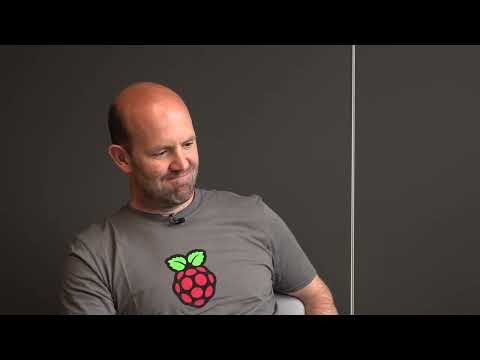 37:45
He started a computing REVOLUTION—then the shortage hit
224K views • 3 years ago
Jeff Geerling
Jeff Geerling interviews Raspberry Pi co-founder Eben Upton about the Pi shortage, the RP2040, RISC-V, the Sony investment and the origin of the name.
 19:59
EEVblog 1547 (Part 1) - Contacting the Voyager 2 Space Probe
71K views • 3 years ago
EEVblog
EEVblog interviews Richard Stephenson of NASA's Canberra Deep Space Communications Complex about how the 70m DSS-43 dish is used to contact Voyager 2. It covers the ground antenna and low-noise receiver side of deep space communication. This is a 2023 re-release of a 2017 video.
 39:41
Elon Musk Mahalo Mentor Interview
97K views • 15 years ago
mahalodotcom
A roughly 40-minute Mahalo mentor interview with Elon Musk, covering his background from Zip2 and PayPal to SpaceX, Tesla and SolarCity, along with advice for entrepreneurs.
 19:55
The Great 202 Jailbreak - Computerphile
532K views • 12 years ago
Computerphile
Computerphile with Professor Brailsford on how a 1979 Bell Labs team reverse engineered a Linotron 202 phototypesetter over a summer to get high-quality print output. It covers typesetting history and the later 2013 rebuild of the famous vacation memo.
 6:23
Simon Peyton Jones - Haskell is useless
385K views • 14 years ago
bunidanoable
A short clip of Simon Peyton Jones talking about the future of programming languages, saying Haskell is useless in the sense that pure programs cannot have effects, while mainstream languages are useful but unsafe. He describes languages converging, with ideas such as STM and LINQ moving between them.