standard ml
 3:34
Making an international standard cup of tea
2.7M views • 8 years ago
Tom Scott
Tom Scott follows the ISO 3103 / BS 6008 standard to make an international standard cup of tea, using specialist tasting equipment. The video shows how precisely the standard is specified.
 17:20
The Extreme Engineering of ASML’s EUV Light Source
698K views • 4 years ago
Asianometry
Asianometry explains the EUV light source inside ASML's lithography machines, where lasers hit falling tin droplets twice to produce 13.5 nm light. It walks through the engineering of the droplet generator, the pre-pulse and main laser, and the plasma that results.
 9:12
Uncovered - Dangerous Secrets of the DOT Helmet Standard
1.1M views • 8 years ago
FortNine
FortNine argues that the US DOT motorcycle helmet standard (FMVSS 218) is badly outdated and weak. It compares it with Snell and ECE standards and points to where you can look up test reports for your own helmet.
 16:43
The Equation That Explains (Nearly) Everything!
1.6M views • 4 years ago
PBS Space Time
PBS Space Time explains the Standard Model Lagrangian, the single equation encapsulating the particle physics theory, and visualizes what its terms mean.
 1:08:15
Gas stoves aren't really that fast - even standard electric is faster!
827K views • 3 years ago
Technology Connextras
Technology Connections tests how quickly gas, induction and standard electric stoves boil water, with CO2 measurements and a discussion of the advantages and disadvantages of each.
 18:32
The world depends on a collection of strange items. They're not cheap
12.6M views • 3 years ago
Veritasium
Veritasium visits NIST to explain Standard Reference Materials, the carefully characterized items such as peanut butter used to calibrate instruments and keep measurements consistent. It covers why they exist and why they are expensive.
 38:31
The $200M Machine that Prints Microchips: The EUV Photolithography System
2.4M views • 1 year ago
Branch Education
Branch Education's animated deep dive into ASML's EUV photolithography machine and how it prints nanometer-scale transistors onto chips. It covers the system's components and the process of chip manufacturing.
 55:00
The Closest Thing We Have to Alien Technology
64.9M views • 10 months ago
Veritasium
Veritasium explains how ASML's EUV lithography machines make the most advanced computer chips, covering the engineering of the light source, mirrors and the supply chain around them. It is a long-form explainer on the world's most complex commercial machine.
 25:21
Old car headlights were all the same — which was a fairly bright idea
2.5M views • 4 years ago
Technology Connections
Technology Connections explains why American cars all had the same standardized sealed-beam headlights until 1957. It covers the regulations behind the design and the effect on night visibility.
 4:32
Web 2.0 ... The Machine is Us/ing Us
12.1M views • 19 years ago
Michael Wesch
Michael Wesch's five-minute video about Web 2.0, showing how the read/write web, XML and user-generated content change how people create and share information.
 12:59
America Was Wrong About Ethanol - Study Shows
2.9M views • 4 years ago
Engineering Explained
Engineering Explained examines new research suggesting corn ethanol in US gasoline may emit as much or more carbon than gasoline. It covers the Renewable Fuel Standard and why ethanol was assumed to be a green fuel.
 15:53
Quantum Field Theory visualized
2.7M views • 6 years ago
ScienceClic English
ScienceClic gives a 15-minute animated introduction to quantum field theory, covering fields, spin, conserved quantities, the standard model and interactions.
 12:36
Why the Muon g-2 Results Are So Exciting!
1.5M views • 5 years ago
PBS Space Time
A PBS Space Time episode explaining the Fermilab Muon g-2 results and why a discrepancy with the Standard Model prediction could point to new physics.
 10:00
How A London Orchestra Broke International Law
270K views • 7 years ago
12tone
12tone tells the story of pitch inflation and how concert A came to be standardized at 440 Hz, including attempts at legal standards. It is a short music history explainer.
 5:13
Overview of Illumina Sequencing by Synthesis Workflow | Standard SBS chemistry
2.7M views • 10 years ago
Illumina
Illumina's 3D animation of its sequencing-by-synthesis workflow, from sample preparation and cluster generation to sequencing on a flow cell and data analysis.
 35:07
These Stupid Trucks are Literally Killing Us
7.3M views • 3 years ago
Not Just Bikes
Not Just Bikes explains how SUVs and light trucks have grown in size and share of US sales, and why that is dangerous for pedestrians, cyclists and city life. He covers the regulatory loopholes, such as fuel economy rules and the chicken tax, that favored them.
 18:04
How the Higgs Mechanism Give Things Mass
1.9M views • 4 years ago
PBS Space Time
A PBS Space Time episode on how the Higgs mechanism gives particles mass, prompted by Fermilab's heavier-than-expected W boson measurement. It goes beyond the usual pop-science treatment without heavy math.
 12:07
Why We Can't Have Small Trucks Anymore - Blame the EPA
2M views • 3 years ago
All Cars with Jon
All Cars with Jon explains how EPA fuel economy rules, especially the footprint-based CAFE formula, push automakers away from small trucks.
 3:45
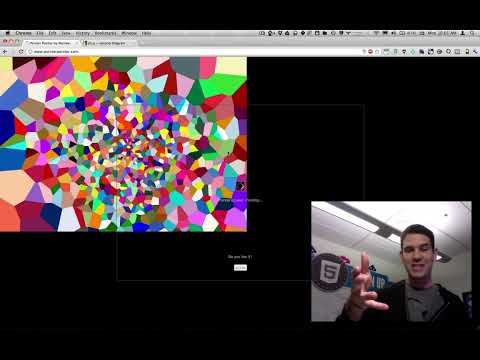
pointerpointer.com's use of voronoi, canvas, and javascript
40K views • 14 years ago
Paul Irish
Paul Irish explains how pointerpointer.com works. It uses a hidden canvas of colored Voronoi regions to look up which photo matches the cursor position.
 29:57
The tech which can charge an electric car in 10 minutes
1.3M views • 4 years ago
Technology Connections
Technology Connections explains how modern EV fast charging can fill a battery in about 10 to 20 minutes, covering charging standards and EV road trips.
 18:13
Try to Rule Fairly and You'll Be Overthrown
26M views • 10 years ago
CGP Grey
CGP Grey's animated adaptation of The Dictator's Handbook, explaining how rulers stay in power by keeping a small group of key supporters happy rather than ruling fairly. It lays out selectorate theory and how resources shape regimes.
 18:40
But what is a neural network? | Deep learning chapter 1
25.1M views • 9 years ago
3Blue1Brown
3Blue1Brown's first chapter on deep learning explains what neurons and layers are and the math underlying a basic neural network, using handwritten digit recognition with visual animations.
 23:53
D/A and A/D | Digital Show and Tell (Monty Montgomery @ xiph.org)
647K views • 13 years ago
FL Studio
Monty Montgomery of Xiph.org gives real-time demonstrations of sampling, quantization, bit depth and dither using real audio equipment, including both digital analysis tools and vintage analog bench gear. It shows that sampled audio is not stair-stepped and corrects common misconceptions about digital audio.
 15:01
What Happened to Horses Is Happening to Us
19.8M views • 12 years ago
CGP Grey
CGP Grey's video "Humans Need Not Apply" argues that automation will make a large part of the workforce economically obsolete, much as engines did for horses. It surveys robots and software replacing both physical and mental labor.
 18:14
Stroads are Ugly, Expensive, and Dangerous (and they're everywhere) [ST05]
8.3M views • 5 years ago
Not Just Bikes
Not Just Bikes introduces the "stroad", a street-road hybrid common in the US and Canada that fails at both jobs. He contrasts it with Dutch design, where each road has a single purpose, and covers cost, danger and ugliness.
 10:48
RSA ANIMATE: Drive: The surprising truth about what motivates us
20.2M views • 16 years ago
Royal Society of Arts
An RSA Animate whiteboard adaptation of Dan Pink's talk on what motivates people at work. It argues that beyond simple tasks, autonomy, mastery and purpose drive performance more than money.
 6:30
How the Dutch got their cycle paths
1.2M views • 15 years ago
BicycleDutch
A short BicycleDutch video on how the Netherlands got its cycling infrastructure, including the 1970s protests and the shift away from car-centric planning. The channel later published an updated version.
 5:15
The UK Is a Country Made of Countries
25.1M views • 15 years ago
CGP Grey
CGP Grey's quick, witty explainer on the differences between the United Kingdom, Great Britain and England, and the countries that make up the UK.
 12:50
How close is nuclear fusion power?
764K views • 5 years ago
Sabine Hossenfelder
Sabine Hossenfelder explains how close nuclear fusion really is to break-even, and why headlines about ITER and lab milestones are misleading. She distinguishes plasma gain (Q plasma) from whole-system gain (Q total) and shows the latter is still far below one.
 19:05
Why No One Has Measured The Speed Of Light
24.3M views • 6 years ago
Veritasium
Veritasium explains why the one-way speed of light has never been measured, only the round-trip speed, since measuring it requires synchronized clocks that assume the answer. It explores the implications for relativity.
 21:36
Fractals are typically not self-similar
4.6M views • 9 years ago
3Blue1Brown
3Blue1Brown explains fractal dimension and shows why many fractals are not strictly self-similar. Self-similarity turns out to be a special case of the broader idea of fractional dimension.
 12:14
Why We Won't Raise Our Kids in Suburbia
5.2M views • 4 years ago
Not Just Bikes
Not Just Bikes argues that car-dependent suburbs rob children of independence, contrasting North American suburbia with Dutch cities where kids walk and bike on their own. It is the creator's remake of an earlier video on the topic.
 13:03
Intelligence and Stupidity: The Orthogonality Thesis
710K views • 8 years ago
Robert Miles AI Safety
Robert Miles explains the orthogonality thesis: how an agent can be highly intelligent while pursuing goals that seem stupid or alien to humans. He separates intelligence from goals and touches on the stamp-collector example.
 14:27
The Biggest Myth In Education
15.5M views • 5 years ago
Veritasium
Veritasium debunks the idea of learning styles, such as being a visual learner, with an interview with Daniel Willingham and a memory experiment. It argues that a multimodal approach helps everyone.
 9:37
Characters, Symbols and the Unicode Miracle - Computerphile
2.1M views • 13 years ago
Computerphile
Tom Scott explains for Computerphile how Unicode and UTF-8 grew out of messy older character encodings to become the web's standard. It covers why the design works and how it handles worldwide text.
 7:35
End of Space – Creating a Prison for Humanity
14.6M views • 7 years ago
Kurzgesagt – In a Nutshell
Kurzgesagt explains how accumulating space junk could trigger a collision cascade (Kessler syndrome) that makes launches too dangerous and traps humanity on Earth.
 8:10
The Houses that Can't be Built in America - The Missing Middle
2.9M views • 5 years ago
Not Just Bikes
Not Just Bikes explains missing middle housing, such as duplexes, townhouses and small apartment buildings. The video argues that zoning in the US and Canada has made these options almost illegal.
 18:40
Drone Delivery Was Supposed to be the Future. What Went Wrong?
2.8M views • 4 years ago
Wendover Productions
Wendover Productions explains why drone delivery has not become the future once promised. It covers no-fly zones, costs and the difficulty of the final drop-off.
 13:39
How is this Website so fast!?
2.4M views • 2 years ago
Wes Bos
Wes Bos breaks down the techniques behind the McMaster-Carr website's speed: server-rendered HTML, prefetching, CDN and service worker caching, preloading, critical CSS and fixed-size images. He also notes its old-school jQuery and YUI JavaScript.
 3:35
How our voting system (and IRV) betrays your favourite candidate
35K views • 12 years ago
The Center for Election Science
The Center for Election Science explains favorite betrayal in instant-runoff voting: in some elections, ranking your favorite first can cause your least favorite to win. It contrasts this with plurality voting's spoiler problem.