think different
 9:31
Around The Corner - How Differential Steering Works (1937)
22.3M views • 17 years ago
US Auto Industry
A 1937 GM-produced film explaining how the automobile differential lets wheels turn at different speeds around a corner. It uses clear animations and cutaway demonstrations to build the idea from first principles.
 18:15
So... the minute hand shows progression — apparently we think of time in wildly different ways
706K views • 4 years ago
Technology Connextras
A Technology Connections video essay on how analog and digital clocks shape different mental models of time, with the minute hand acting as a progress indicator.
 12:10
The Science of Thinking
9.3M views • 9 years ago
Veritasium
A Veritasium explainer on how the brain works and how we learn. It is inspired by Kahneman's Thinking, Fast and Slow and covers System 1 and System 2 thinking and why harder learning builds skill.
 12:32
Protecting Privacy with MATH (Collab with the Census)
451K views • 7 years ago
minutephysics
minutephysics, in collaboration with the US Census Bureau, explains differential privacy and why the 2020 census adds noise to protect individuals' data. It walks through how statistics can leak private information.
 10:23
RSA ANIMATE: Smile or Die
2.5M views • 16 years ago
Royal Society of Arts
An RSA Animate drawing of Barbara Ehrenreich's talk on the darker side of positive thinking. It argues that forced positivity in culture, work and policy can be harmful and played a part in the financial crisis.
 18:58
The Great Stranding: How Inaccurate Mainstream LCOE Estimates are Creating a Trillion-Dollar Bubble
38K views • 5 years ago
RethinkX
RethinkX summarizes its report arguing that mainstream LCOE estimates are inflating a bubble in coal, gas, nuclear and hydro assets. It claims solar, wind and batteries will strand conventional energy investments.
 10:59
Your Brain Thinks Your Whole Home Is One Room
6.8M views • 6 years ago
CGP Grey
CGP Grey argues that your brain treats a whole home as one room during lockdown, blurring work, rest and leisure. He recommends creating separate spaces and routines for different activities to stay balanced.
 8:00
Infinity is bigger than you think - Numberphile
7.7M views • 14 years ago
Numberphile
Numberphile's James Grime explains Cantor's result that some infinities are bigger than others, including why the reals outnumber the integers. It is a short, accessible introduction to countable and uncountable infinity.
 23:47
I Think Faster Than Light Travel is Possible. Here's Why.
3.8M views • 3 years ago
Sabine Hossenfelder
Sabine Hossenfelder explains why she thinks faster-than-light travel may not be ruled out. She argues that the standard objections from special relativity are inconclusive.
 5:25
Does the language you speak change how you think?
1.6M views • 3 years ago
Tom Scott
Tom Scott, with linguists Gretchen McCulloch and Molly Ruhl, examines whether the language you speak changes how you think. The short answer is mostly no, with caveats about the weak version of the Sapir-Whorf hypothesis.
 11:24
The Tube Map nearly looked very different
2.6M views • 4 years ago
Map Men
Map Men's Jay Foreman tells the story of how the London Tube map nearly looked very different, including Harry Beck's design and TfL's initial rejection of it. A short, witty history of a design icon.
 25:13
Thinking outside the 10-dimensional box
3.2M views • 9 years ago
3Blue1Brown
3Blue1Brown visualizes high-dimensional spheres to explain a surprising puzzle about how a sphere fits in a box as dimensions grow. It builds geometric intuition for counterintuitive properties of high-dimensional space.
 18:48
Connecting Solar to the Grid is Harder Than You Think
2.4M views • 2 years ago
Practical Engineering
Practical Engineering explains why connecting solar and other inverter-based generation to the grid is hard. It covers grid stability, load balancing and the behind-the-scenes engineering challenges of renewables.
 21:42
Future Computers Will Be Radically Different (Analog Computing)
13.2M views • 4 years ago
Veritasium
Veritasium explains why analog computing may suit AI workloads, covering old analog computers, The Analog Thing and Mythic's analog chips that use flash memory for neural network inference. It argues digital hardware is hitting limits.
 27:47
Your dishwasher is better than you think (tips, tricks, and how they work)
8.4M views • 2 years ago
Technology Connections
Technology Connections explains how dishwashers work and how to use them well, including detergent use, the prewash cycle and why pre-rinsing hurts. It follows his earlier dishwasher videos.
 15:27
Why Not Just: Think of AGI Like a Corporation?
163K views • 7 years ago
Robert Miles AI Safety
Robert Miles asks whether corporations can be thought of as artificial general superintelligences and how far the analogy holds. He argues the differences, such as being limited by employees' capabilities, matter for AI safety.
 7:45
The 100 Year Flood Is Not What You Think It Is (Maybe)
2.3M views • 10 years ago
Practical Engineering
Practical Engineering explains what a 100-year flood actually means, combining statistics, hydrology and how society treats risk. Grady walks through local drainage infrastructure and the caveats in estimating flood probability.
 13:08
We Need to Rethink Exercise (Updated Version)
5.9M views • 2 years ago
Kurzgesagt – In a Nutshell
Kurzgesagt explains why exercise alone does little for weight loss, since the body compensates by adjusting its total energy expenditure. It argues exercise is still very valuable for health.
 5:51
Europe Is Actually Five Different Groups of Countries
14.9M views • 13 years ago
CGP Grey
A short CGP Grey explainer on the overlapping and inconsistent membership arrangements of European countries across the EU, Schengen, the euro and the EEA. It shows why "the EU" is full of exceptions.
 17:24
The touch lamp; a neat idea, and older than you'd think!
1.8M views • 6 years ago
Technology Connections
Technology Connections explains how touch lamps work and traces them back through patents to the 1950s, far earlier than most people assume.
 14:51
Grid: Renewable Baseload Power from a single desert location. Enough for 7 million homes!
197K views • 5 years ago
Just Have a Think
A Just Have a Think video on the proposed 16 billion pound Xlinks project to build solar, wind and battery capacity in southern Morocco. It would send around 3.6GW to the UK by subsea HVDC cable as near-baseload power.
 45:08
Adam Savage's Epiphany on the Science of Measurement!
1.1M views • 4 years ago
Adam Savage’s Tested
Adam Savage shows a set of Mitutoyo ceramic gauge blocks and uses them to explain metrology, the science of measurement. He argues that accuracy and precision work differently than most people assume, which changes how you think about every measuring tool.
 1:13:50
The Continuity of Splines
1.9M views • 3 years ago
Freya Holmér
Freya Holmer's 74-minute video essay on splines, covering Bezier curves, B-splines, derivatives and the different levels of continuity (C0, C1, C2), built with custom animation tools. She notes she did not cover non-uniform splines.
 5:43
The EU Has Orbits, and the UK Fell Out of All of Them
0 views • 7 years ago
CGP Grey
CGP Grey's six-minute explainer of the relationships the UK could have with the EU, based on Barnier's slide, shown as orbits of different closeness. It explains why the UK's red lines ruled out the closer options.
 11:38
The Economics of Airline Class
12.2M views • 9 years ago
Wendover Productions
Wendover Productions explains how airlines make money from different cabin classes and why premium seats matter so much to profits. It also touches on how this shaped decisions such as the decline of supersonic travel.
 14:27
All the Numbers - Numberphile
1.8M views • 7 years ago
Numberphile
Matt Parker talks Numberphile through the different kinds of numbers: algebraic, transcendental, computable, normal, and beyond. It shows how few numbers we can actually name or describe.
 31:51
Visualizing the 4d numbers Quaternions
5.6M views • 8 years ago
3Blue1Brown
3Blue1Brown builds visual intuition for quaternions, showing how to think about this four-dimensional number system using stereographic projection and rotations in 3D space. It is part one of a two-part series with an interactive companion site.
 23:46
How To Count Past Infinity
29.7M views • 10 years ago
Vsauce
Vsauce's Michael Stevens takes viewers past infinity using transfinite numbers, ordinals and cardinals, with input from mathematician Hugh Woodin. It is a fast-paced, mind-bending tour of different sizes of infinity.
 7:15
A Selfish Argument for Making the World a Better Place – Egoistic Altruism
11.4M views • 8 years ago
Kurzgesagt – In a Nutshell
Kurzgesagt makes a selfish case for improving the world, arguing that helping people far away raises prosperity and innovation for everyone, including yourself. The animated video frames this as egoistic altruism and positive-sum cooperation.
 8:05
What People Get Wrong About Induced Demand
291K views • 5 years ago
Oh The Urbanity!
Explains induced demand beyond roads, showing that it applies to transit, walking and cycling infrastructure too but with different consequences. It corrects common misunderstandings of the concept.
 4:26
British Plugs Are Better Than All Other Plugs, And Here's Why
7.6M views • 12 years ago
Tom Scott
Tom Scott explains the design of the British BS 1363 plug and socket, including fuses, shutters and safety features, and why he thinks it beats other plugs.
 16:21
The Ranks of Global Billionaires: Not All Billionaires Are Made Equal
2M views • 6 years ago
Economics Explained
An Economics Explained video on the different kinds of billionaires, from founders to oligarchs. It explains how wealth is held in illiquid stock and why diversification is a problem for some.
 22:13
what did you do
1.5M views • 11 months ago
Noodle
Noodle explores how retro pixel art was designed for CRT displays and why games look different on LCDs, with input from pixel artists and CRT researchers.
 11:48
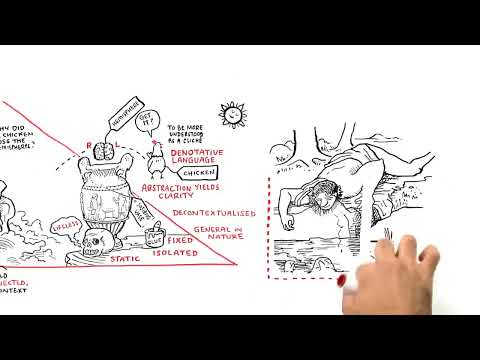
RSA ANIMATE: The Divided Brain
2.2M views • 15 years ago
Royal Society of Arts
An RSA Animate summary of Iain McGilchrist's lecture on the divided brain, arguing the brain's two hemispheres attend to the world differently and that this has shaped culture and society.
 45:13
You've (Likely) Been Playing The Game Of Life Wrong
11.6M views • 11 months ago
Veritasium
Veritasium explains why many real-world systems follow power laws rather than normal distributions. It covers self-organized criticality, with simulations of sandpiles, magnetism and forest fires.
 8:35
Buster Keaton - The Art of the Gag
8.4M views • 10 years ago
Every Frame a Painting
An Every Frame a Painting video essay on Buster Keaton's visual comedy, examining how he built and framed his gags. It uses clips from his silent films to show the thinking behind them.
 8:30
Deadly Truth of General AI? - Computerphile
941K views • 11 years ago
Computerphile
A Computerphile video in which Rob Miles warns against assuming a general AI will think like a human. He uses the thought experiment of a stamp-collecting AI to show how a goal-driven system could pursue its aim with dangerous results.
 5:17
Why Women Are Stripey
10.8M views • 12 years ago
Veritasium
Veritasium explains X-chromosome inactivation, where different cells in a woman's body switch off different X chromosomes, giving a mosaic pattern. It uses animation from the WEHI institute and connects to calico cat coloring.
 6:01
Cambridge Ideas - Professor Risk
128K views • 16 years ago
Cambridge University
David Spiegelhalter, Professor of the Public Understanding of Risk, uses statistics to weigh everyday risks such as bacon sandwiches and cycling. The six-minute piece introduces micromorts as a way to compare the risk of dying.
 20:47
Decaf Explained
2.1M views • 2 years ago
James Hoffmann
James Hoffmann explains how decaf coffee is made, how the decaffeination processes differ, and why decaf is roasted and stales differently. He also discusses decaf quality and health questions.