fibre optic
 18:31
Fourier Optics used for Optical Pattern Recognition
103K views • 6 years ago
Huygens Optics
Huygens Optics explains the Fourier transform and shows how a lens performs one optically. A DLP projector is used as a Fourier filter to do simple pattern recognition on lithographic character patterns.
 1:59:29
Tutorial: New and Updated - Everything You Always Wanted to Know About Optical Networking
58K views • 9 years ago
NANOG
A two-hour NANOG tutorial by Richard Steenbergen aimed at network engineers, covering optical networking technologies. This is the updated 2017 edition of a recurring talk.
 14:22
Hypercentric optics: A camera lens that can see behind objects
597K views • 6 years ago
Applied Science
Applied Science shows how telecentric and hypercentric optics differ from normal lenses, producing no or negative perspective. The video builds a telecentric system from a Fresnel lens and demonstrates a lens that can see around objects.
 11:33
Light Waves Visualized using Photon Sieves.
69K views • 6 years ago
Huygens Optics
Huygens Optics shows how DIY photon sieves shape a laser's wave front, explaining how they differ from zone plates and how aperture count affects the focal point, with time-resolved visualizations of the diffraction.
 20:34
How big is a visible photon?
793K views • 5 years ago
Huygens Optics
Huygens Optics shows through a laser interference experiment that the question of a photon's size is really about coherence length. It argues that photons exist as energy exchanges between radiation and matter, not as little particles in free space.
 54:27
The Secrets Of Cornwall - Part 1 - Communications
259K views • 10 years ago
Mark Thomas
A documentary on how Cornwall became a hub for the world's communications, from the first transatlantic radio signal to modern undersea fibre cables. It describes how cable landing stations and the systems are put together.
 19:00
Optical illusions show how we see | Beau Lotto
3.5M views • 17 years ago
TED
Neuroscientist Beau Lotto runs the audience through color and pattern illusions to show that perception is shaped by context and evolutionary history rather than being a direct readout of the world. The talk is playful and hands-on, and it argues that the brain interprets ambiguous signals.
 14:40
Etching small patterns in Glass
221K views • 5 years ago
Huygens Optics
Huygens Optics experiments with etching tiny patterns in glass, covering hydrofluoric acid risks, buffered oxide etch, photoresist and chromium masks, and laser-induced etching. It ends with attempts at microscopic Tesla valves.
 45:55
Turning Waves Into Particles
194K views • 1 year ago
Huygens Optics
Huygens Optics explores the idea that space is a non-linear elastic medium, and uses simulations to show how wave energy might be confined locally into particle-like objects. It touches on inertia, the Schwinger limit and the vacuum as a medium.
 1:03:14
re:publica 2015 - Aral Balkan: Beyond The Camera Panopticon
21K views • 11 years ago
re:publica
Aral Balkan's re:publica 2015 talk argues that people are the product of surveillance-based business models. It makes an ethical case against data monopolies and for privacy as a human right.
 8:10
INCREDIBLE ZOOM | Nikon P1000 | Ben Lomond | Scotland
2.7M views • 7 years ago
The Hovering Scotsman
Footage shot with a Nikon P1000 superzoom camera showing extreme optical zoom on distant targets from Ben Lomond in Scotland.
 9:02
The Glass Age, Part 1: Flexible, Bendable Glass
7.3M views • 11 years ago
Corning Incorporated
A Corning-sponsored video in which Adam Savage and Jamie Hyneman introduce flexible, bendable glass. It covers the history of glass innovation with demonstrations of bendable optical fiber and ultra-thin glass.
 3:25
What happens at a Materials Recycling Facility? (MRF) - How does our sorting machine work?
101K views • 13 years ago
Devon Contract Waste
A short tour of a UK materials recycling facility showing how mixed recyclables are mechanically and optically sorted. Aluminum, ferrous metal, glass, paper, and trash come out as separate streams.
 21:15
Brown; color is weird
5.3M views • 6 years ago
Technology Connections
Technology Connections explains why brown is not a spectral color but a context-dependent perception, essentially dark orange seen against brighter surroundings.
 28:34
But why would light "slow down"? | Visualizing Feynman's lecture on the refractive index
2.9M views • 2 years ago
3Blue1Brown
3Blue1Brown visualizes Feynman's lecture on the refractive index, explaining why light appears to slow down in glass and why the effect depends on color. It builds the idea from waves produced by oscillating charges in the material.
 1:15:21
Marc Levoy - Lectures on Digital Photography - Lecture 1 (21mar16).mp4
512K views • 10 years ago
Marc Levoy
The first lecture in an 18-part series on digital photography from Marc Levoy's Stanford CS 178 course, recorded at Google in 2016. The series covers how digital cameras work and computational photography, with slides and assignments available on the course site.
 1:28:31
Telescope Building with John Dobson
1.7M views • 11 years ago
Dobson Astro-Initiatives
A roughly 90-minute film of John Dobson building a Dobsonian telescope step by step, including hand-grinding the mirror.
 46:24
How are holograms possible?
7.2M views • 2 years ago
3Blue1Brown
3Blue1Brown explains how holograms record a 3D scene on 2D film, using wave diffraction and phase. The video includes demonstrations of several real holograms.
 3:16
Feynman: Mirrors FUN TO IMAGINE 6
600K views • 18 years ago
Christopher Sykes
Richard Feynman, in a clip from the BBC series Fun to Imagine, takes on the puzzle of why mirrors seem to swap left and right but not top and bottom.
 10:24
Why does light slow down in water?
1.3M views • 7 years ago
Fermilab
Fermilab's Don Lincoln explains why light travels slower in water and glass. He knocks down common wrong explanations such as absorption and re-emission, then gives the wave-mechanics reason tied to refractive index.
 27:16
How Do Night Vision Goggles Work?
8.4M views • 3 years ago
Veritasium
Veritasium visits the US Navy's Crane facility to test top night vision goggles. It explains how image intensifier tubes and thermal or digital systems work and compares the generations of the technology.
 16:30
Why is light slower in glass? - Sixty Symbols
848K views • 13 years ago
Sixty Symbols
Professor Mike Merrifield of Nottingham explains in a mostly uncut conversation why light travels slower in glass. He treats light as a wave and describes how the material's electrons produce secondary waves that combine to slow it.
 7:40
The Original Double Slit Experiment
10.2M views • 13 years ago
Veritasium
Veritasium revisits Thomas Young's original double slit experiment with light, showing how interference supports the wave nature of light. It uses a pond-wave demonstration to explain the pattern.
 16:51
How we can use light to see deep inside our bodies and brains | Mary Lou Jepsen
297K views • 8 years ago
TED
Inventor Mary Lou Jepsen demonstrates using red light and sound to see inside the body and brain, aiming at tumor detection and neural activity measurement, and potentially a cheaper wearable MRI replacement.
 19:45
Building a realistic artificial sun (for dark winter days)
3.3M views • 6 years ago
DIY Perks
DIY Perks builds a realistic artificial sun for dark winters, using a powerful water-cooled LED, a satellite dish reflector for near-parallel rays, and a scattering layer to mimic the blue sky. The video explains the optics behind why most lamps do not look like sunlight and shows the build and its results.
 7:49
Crash Course - The SMIDSY
288K views • 17 years ago
lbtv
A motorcycle safety video on the SMIDSY (sorry mate, I didn't see you) accident, explaining the perception and optical illusion that makes drivers fail to see riders, and how riders can spot the signs and avoid it.
 18:40
Why The World Relies On ASML For Machines That Print Chips
4.3M views • 4 years ago
CNBC
CNBC gets a tour of ASML's cleanrooms in the Netherlands to see how its roughly $200 million EUV lithography machines are built. It covers exploding molten tin, ultra-flat optics and why only one company can make these systems.
 27:09
Sega Saturn CD - Cracked after 20 years
4.4M views • 10 years ago
debuglive
A look inside Dr Abrasive's lab as he engineers a flash-card replacement for the Sega Saturn optical drive after cracking its CD protection 20 years on.
 10:15
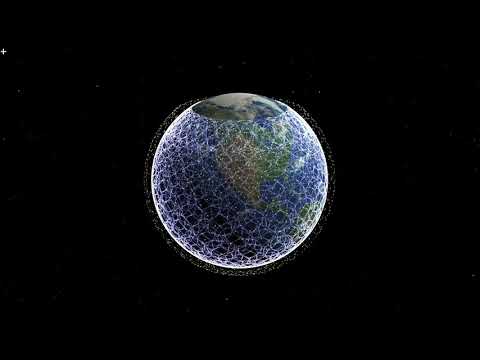
Using ground relays with Starlink
506K views • 6 years ago
Mark Handley
Mark Handley of UCL explains, with simulation visualizations, how early Starlink satellites without inter-satellite links could still give low-latency wide-area communication by hopping via ground relays. He shows it can beat fibre on many long paths.
 1:39
Unveiling High NA EUV | ASML
573K views • 2 years ago
ASML
ASML's short promotional fly-through of its High NA EUV lithography platform, the TWINSCAN EXE, which supports 8-nanometer resolution. It shows the machine's internals including advanced anamorphic optics.
 7:45
Measure the mass of an eyelash with a DIY microbalance
141K views • 12 years ago
Applied Science
Ben Krasnow of Applied Science builds a DIY microbalance from an analog panel meter with an optical servo loop. It reaches about 5 micrograms of precision and is used to weigh a single eyelash at around 35 micrograms.
 5:25
Make Your Renders Unnecessarily Complicated
1.2M views • 3 years ago
sirrandalot
A video showing a virtual camera built in Blender that simulates lenses and film layers using path tracing, to make physically modeled photographs.