constraint solving
 51:40
Constraints Liberate, Liberties Constrain — Runar Bjarnason
44K views • 10 years ago
Scala World
Runar Bjarnason's Scala World talk argues that restraint and precision in components beat power and flexibility. Constraints on parts make them easier to compose into systems.
 1:09:20
Don Knuth - Constraint Based Composition
9K views • 11 years ago
ccrmalite1
Donald Knuth explains at Stanford's CCRMA the constraint-based methods he is using to compose a major work for pipe organ.
 14:28
Superpositions, Sudoku, the Wave Function Collapse algorithm.
764K views • 6 years ago
Martin Donald
Martin Donald explains the Wave Function Collapse algorithm using Sudoku-like constraint solving and shows how he implemented it with Blender and Godot. It links demos and reference articles.
 56:03
A Tour of Prolog
33K views • 4 years ago
The Power of Prolog
Markus Triska tours Prolog's most distinctive features, including its use as a database and query language, rule processing, constraint solving and compile-time rewriting. It also covers concise meta-interpreters.
 25:22
The Fastest Maze-Solving Competition On Earth
25.3M views • 3 years ago
Veritasium
Veritasium visits the Micromouse competition, where small autonomous robots race to solve mazes at extreme speed. It covers the competition's technical history, including fans and ground effect enabling very high-g turns.
 1:14:30
Rocker Jack White - Serious Jibber-Jabber with Conan O'Brien | Team Coco
2.8M views • 13 years ago
Team Coco
Conan O'Brien interviews Jack White in a Serious Jibber-Jabber episode shot on 35mm film. They discuss White's creative process, his use of constraints and his approach to music and art.
 1:10:00
The Mental Game of Python - Raymond Hettinger [synced version]
24K views • 6 years ago
Tech Ma
Raymond Hettinger's PyBay 2019 talk on the mental strategies he uses when programming in Python, such as chunking, solving a simpler related problem, and repeating tasks manually until patterns emerge. This version is re-synced with the slides.
 11:15
The hardest problem on the hardest test
16.5M views • 8 years ago
3Blue1Brown
3Blue1Brown walks through a very hard Putnam competition problem and its elegant solution, emphasizing the visual intuition and the thought process behind solving it.
 19:20
Ivan Sutherland Sketchpad Demo 1963
136K views • 14 years ago
Interface Studies
A TV show about Ivan Sutherland's 1963 MIT thesis software Sketchpad, which ran on the TX-2 computer. It shows a light pen drawing, constraints, snapping, scaling and object-style graphics, foundations of GUIs and CAD.
 1:04:19
"We Really Don't Know How to Compute!" - Gerald Sussman (2011)
96K views • 5 years ago
Strange Loop Conference
Gerald Sussman's 2011 Strange Loop keynote argues we still do not know how to compute, comparing biological systems with how we program machines. It touches on propagators, constraint programming and robustness.
 3:47
Sketchpad, by Dr. Ivan Sutherland with comments by Alan Kay
54K views • 19 years ago
David Carroll
Earliest known footage of Ivan Sutherland's MIT PhD work, Sketchpad, the first computer graphics system, with commentary by Alan Kay. It shows light-pen drawing with constraints in a short clip.
 1:02:26
Solving Problems the Clojure Way - Rafal Dittwald
87K views • 7 years ago
Clojure/north
Rafal Dittwald's Clojure/north talk shows how to move from writing Java-style code in Clojure to thinking in data-driven, functional terms. He walks through a JavaScript example, refactoring imperative code step by step into a functional core.
 36:10
Dr. Jason Fung - 'Therapeutic Fasting - Solving the Two-Compartment Problem'
6.4M views • 10 years ago
Low Carb Down Under
Dr. Jason Fung, a nephrologist, explains therapeutic fasting as a treatment for obesity and type 2 diabetes. He frames it around the two-compartment problem of fat storage and insulin resistance.
 20:49
How Prince of Persia Defeated Apple II's Memory Limitations | War Stories | Ars Technica
1.5M views • 6 years ago
Ars Technica
In an Ars Technica War Stories episode, Prince of Persia creator Jordan Mechner describes how he made the game on the Apple II, fighting hardware memory limits and the platform's decline. It covers the rotoscoped animation and the engineering tricks involved.
 1:42
It's Not About The Nail
30.2M views • 13 years ago
Jason Headley
A two-minute comedy sketch in which a woman describes her problems while a visible nail sticks out of her head, and her partner keeps trying to fix it instead of listening. It dramatizes the gap between wanting empathy and being offered solutions.
 48:36
Matt Might - Winning the War on Error Solving the Halting Problem and Curing Cancer
9K views • 9 years ago
Curry On!
Matt Might's Curry On talk on ending errors in code, both software and the human genome. He covers conservative approximation of the halting problem via static analysis and a computational approach to precision medicine.
 59:34
PRACTICE 2018: Joseph White
21K views • 8 years ago
NYU Game Center
Joseph White, creator of PICO-8, retraces the design of the fantasy console and how tools can shape and guide creative work. He discusses cozy, constrained design spaces and the influence of user-made cartridges.
 9:02
India's Water Revolution #1: Solving the Crisis in 45 days with the Paani Foundation
1.5M views • 6 years ago
Andrew Millison
Permaculture instructor Andrew Millison visits the village of Garavadi in Maharashtra, India, which took part in the Paani Foundation's Water Cup competition. It shows the water harvesting structures the villagers built in 45 days and how they restored groundwater and the local economy.
 4:09
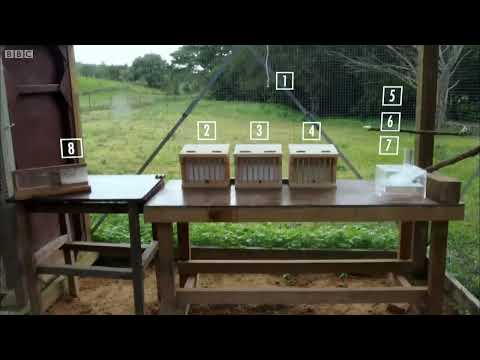
Are Crows the Ultimate Problem Solvers? | Inside the Animal Mind | BBC Earth
4.8M views • 12 years ago
BBC Earth
A BBC Earth clip from Inside the Animal Mind in which a crow named 007 solves an eight-step puzzle to get a reward. It showcases crow problem-solving.
 14:27
A simple trick to design your own solutions for Rubik's cubes
1.6M views • 10 years ago
Mathologer
Mathologer shows a simple idea, the commutator, that lets anyone who can solve the first layer design their own full Rubik's cube solution. The same idea carries over to other symmetric twisty puzzles such as the Megaminx.
 22:51
GopherCon 2015: Go GC: Solving the Latency Problem - Rick Hudson
22K views • 11 years ago
Gopher Academy
Rick Hudson's GopherCon 2015 talk on Go 1.5's new low-latency concurrent garbage collector. It covers the motivation, performance numbers, technical challenges and why the approach fits Go.
 30:38
Solving Wordle using information theory
11.8M views • 4 years ago
3Blue1Brown
3Blue1Brown uses Wordle as an excuse to teach information theory and entropy, building a solver that picks guesses by expected information and incorporating word frequencies.
 39:49
Hammock Driven Development - Rich Hickey
333K views • 13 years ago
ClojureTV
Rich Hickey's philosophical talk from the first Clojure Conj in 2010. He argues that good design comes from deliberate, away-from-keyboard thinking, and describes how to feed the background mind so it solves problems.
 1:00:12
Pitfall Classic Postmortem With David Crane Panel at GDC 2011 (Atari 2600)
76K views • 15 years ago
GameSpot
David Crane, designer of Pitfall for the Atari 2600, gives a GDC 2011 postmortem on the game's design challenges. He covers how he fit a large world into the console's tiny memory. The session ends with Q&A.
 32:24
RustLatam 2019 - Without Boats: Zero-Cost Async IO
55K views • 7 years ago
Rust Programming Language
Without Boats, a Rust language team member, explains the design of Rust's async/await at RustLatam 2019. He covers the history and constraints behind zero-cost, allocation-free async state machines.
 1:10:00
The Mental Game of Python - Raymond Hettinger
131K views • 7 years ago
SF Python
Raymond Hettinger's PyBay 2019 talk on the mental habits behind effective programming, drawn from coaching, teaching and StackOverflow. He covers problem decomposition, chunking, managing working memory and getting unstuck.
 1:01:08
1. A strange determinant
30K views • 5 years ago
Timothy Gowers
Timothy Gowers thinks aloud, in real time, as he tries to understand why Pascal's determinant equals 1. He does not fully solve it in this episode, but shows his exploratory process.
 12:20
I Solved Klotski
2.1M views • 1 year ago
2swap
2swap explains how he solved the Klotski sliding-block puzzle by mapping its full state space as a graph and visualizing it. The video includes footage of the Guinness world-record solve and links to an interactive graph.
 31:00
ALAIN COLMERAUER L'AVENTURE PROLOG
7K views • 4 years ago
Prolog Heritage
A French-language documentary on the history of Prolog, created in Marseille by Alain Colmerauer in the early 1970s, with interviews of many people involved. It traces the origins of logic programming and later developments of the language.
 0:31
0.38 Second Rubik's Cube Solve
36.8M views • 8 years ago
Ben Katz
Ben Katz's custom robot solves a Rubik's Cube in 0.38 seconds. The description links to the hardware and software write-ups.
 1:05:37
Designing the Ideal Bootstrapped Business with Jason Cohen
551K views • 6 years ago
Rob Walling
Jason Cohen's MicroConf talk on designing a bootstrapped business by starting from your own strengths, goals and constraints. He works backward to the business model, pricing, market and product that fit, with practical points like annual prepay and pricing tiers.
 31:37
How Crash Bandicoot Hacked The Original Playstation | War Stories | Ars Technica
5.2M views • 6 years ago
Ars Technica
In Ars Technica's War Stories, Naughty Dog co-founder Andy Gavin explains how the team squeezed Crash Bandicoot onto the original PlayStation. They overwrote Sony library code in RAM, built custom animation compression, and streamed assets around slow seek times.
 25:41
Compiling C to printable x86, to make an executable research paper
479K views • 9 years ago
suckerpinch
Tom7 explains how he built a SIGBOVIK 2017 paper made only of printable ASCII bytes that is also a valid DOS executable. He writes a C compiler targeting printable x86 without self-modifying code and solves the puzzles the constraint creates.
 48:27
Jonathan Blow: Game design: the medium is the message
119K views • 13 years ago
CreativeMornings HQ
Jonathan Blow's CreativeMornings talk arguing that business models shape game design, drawing an analogy between 1970s TV and HBO and between free-to-play and premium games. He calls for games that inspire awe rather than chase constraints.
 59:53
CppCon 2019: Chandler Carruth “There Are No Zero-cost Abstractions”
147K views • 7 years ago
CppCon
Chandler Carruth argues in a CppCon 2019 talk that C++ has no truly zero-cost abstractions. Using examples like unique_ptr, ABI constraints and compile-time costs, he shows that abstractions cost runtime, compile time or human effort.
 41:39
BOLTR: Juicero, Cold Press Juicer for Rich Weirdos
2.5M views • 9 years ago
AvE
AvE tears down the Juicero cold-press juicer, examining its heavily machined parts, electronics and the pricey juice packs. He pokes fun at the product and venture-funded culture along the way.
 1:23
Bryan Cranston's Advice to Aspiring Actors
616K views • 13 years ago
Oscars
A one-minute clip of Bryan Cranston at an Academy new-member reception, advising actors to approach auditions without desperation and focus on solving the problem rather than landing the job.
 11:54
Building a Cathedral without Science or Mathematics: The Engineering Method Explained
1.1M views • 3 years ago
engineerguy
Bill Hammack of engineerguy explains how medieval engineers designed stone cathedrals using rules of thumb, with no science, mathematics or literacy. He uses it to define the engineering method.
 1:18:03
Dtrace Review
19K views • 14 years ago
GoogleTalksArchive
Bryan Cantrill's 2007 Google Tech Talk on DTrace, showing how dynamic tracing improves debugging of both development and live production systems. It includes a vivid war story about tracking down a problem on a Sun Ray server.
 5:08
7 Minutes of Terror: The Challenges of Getting to Mars
3.2M views • 14 years ago
NASA Jet Propulsion Laboratory
NASA JPL engineers explain the final minutes of the Curiosity rover's entry, descent and landing on Mars, which combined aerobraking, a parachute and a skycrane. It lays out the tight sequence of events that all had to work automatically.