statistics
 7:38
How We’re Fooled By Statistics
3.8M views • 12 years ago
Veritasium
A short Veritasium video explaining regression to the mean and how ignoring it leads to wrong conclusions about punishment versus reward, medical treatments and sports streaks. It uses the example of flight instructors who believed criticism works better than praise.
 4:12
Correlation CAN Imply Causation! | Statistics Misconceptions
744K views • 9 years ago
minutephysics
A four-minute minutephysics video arguing that causal models and causal networks let statistics infer causation from correlation. It touches on Reichenbach's principle, common causes, feedback and quantum causal discovery.
 6:01
Cambridge Ideas - Professor Risk
128K views • 16 years ago
Cambridge University
David Spiegelhalter, Professor of the Public Understanding of Risk, uses statistics to weigh everyday risks such as bacon sandwiches and cycling. The six-minute piece introduces micromorts as a way to compare the risk of dying.
Topic match · Data science & statistics 18:16
Do these scatter plots reveal fraudulent vote-switching in Michigan?
906K views • 5 years ago
Stand-up Maths
Matt Parker of Stand-up Maths examines scatter plots that were claimed to show fraudulent vote-switching in Michigan's 2020 election. He recreates the analysis and shows that the pattern arises from comparing percentages across different bases, not from fraud.
Topic match · Data science & statistics 19:55
Why was Biden's win calculated to be ONE IN A QUADRILLION?
1.3M views • 5 years ago
Stand-up Maths
Matt Parker of Stand-up Maths examines the Texas Supreme Court filing claiming Biden's 2020 win had a one-in-a-quadrillion chance. He walks through why the statistical argument is flawed.
Topic match · Data science & statistics 7:45
The 100 Year Flood Is Not What You Think It Is (Maybe)
2.3M views • 10 years ago
Practical Engineering
Practical Engineering explains what a 100-year flood actually means, combining statistics, hydrology and how society treats risk. Grady walks through local drainage infrastructure and the caveats in estimating flood probability.
Topic match · Data science & statistics 12:22
Is Most Published Research Wrong?
6.2M views • 10 years ago
Veritasium
Veritasium explains why a large share of published research findings may be false, covering p-values, p-hacking, publication bias and low replication rates. It draws on John Ioannidis's well-known paper and describes reforms such as preregistration.
Topic match · Data science & statistics 45:13
You've (Likely) Been Playing The Game Of Life Wrong
11.6M views • 11 months ago
Veritasium
Veritasium explains why many real-world systems follow power laws rather than normal distributions. It covers self-organized criticality, with simulations of sandpiles, magnetism and forest fires.
Topic match · Data science & statistics 9:36
Dance p 3 Mar09
83K views • 17 years ago
Geoff Cumming
Geoff Cumming uses a simulation to show how wildly the p value varies from one replication to the next because of sampling variability. He argues for estimation and confidence intervals over null hypothesis significance testing.
Topic match · Data science & statistics 17:46
Why do Biden's votes not follow Benford's Law?
3.7M views • 5 years ago
Stand-up Maths
Matt Parker examines claims that Biden's 2020 vote counts violate Benford's Law, explaining the law and why it often does not apply to precinct-level election data.
Topic match · Data science & statistics 8:47
Survivor Bias
1M views • 10 years ago
2veritasium
A Veritasium video on survivor bias, explaining how an observed sample can be incomplete and skewed. It uses examples such as bombers and famous success stories.
Topic match · Data science & statistics 39:47
How lucky is too lucky?: The Minecraft Speedrunning Dream Controversy Explained
8.4M views • 5 years ago
Stand-up Maths
Matt Parker analyzes the Minecraft speedrunning controversy in which Dream was accused of cheating via improbably lucky drops. He walks through the probability and the statistical arguments in the original accusation and the reply.
Topic match · Probability & game theory 12:32
Protecting Privacy with MATH (Collab with the Census)
451K views • 7 years ago
minutephysics
minutephysics, in collaboration with the US Census Bureau, explains differential privacy and why the 2020 census adds noise to protect individuals' data. It walks through how statistics can leak private information.
Topic match · Data science & statistics 10:37
The Bayesian Trap
4.5M views • 9 years ago
Veritasium
Veritasium explains Bayes' theorem with examples and introduces the 'Bayesian trap', where repeated events get mistaken for inevitable ones. It discusses how priors shape our expectations and behavior.
Topic match · Probability & game theory 4:49
BBC - The Code - The Wisdom of the Crowd
395K views • 15 years ago
timb6
Marcus du Sautoy of the BBC demonstrates the wisdom of the crowd, showing that averaging many guesses of jelly beans in a jar lands near the true count.
Topic match · Probability & game theory 6:31
Why Your Vote Doesn't Count
7.9M views • 15 years ago
CGP Grey
CGP Grey explains first-past-the-post voting and why it pushes elections toward two dominant parties. It is the first in his series on electoral systems.
Topic match · Probability & game theory 12:04
Why Being Delusional is a Superpower
15.2M views • 6 years ago
Veritasium
Veritasium examines the role of luck in success, with simulations and examples showing how small advantages and chance can compound. It argues that top outcomes are disproportionately luck-driven while still crediting effort.
Topic match · Probability & game theory 27:19
Once you understand game theory, you understand the world.
26.5M views • 2 years ago
Veritasium
Veritasium explores the Prisoner's Dilemma and Axelrod's tournaments, showing why tit-for-tat and forgiving strategies win in repeated games. It extends the ideas to cooperation in evolution and conflict.
Topic match · Probability & game theory 4:27
The Voting System That Should Replace Every Election
4.7M views • 15 years ago
CGP Grey
A short CGP Grey explainer on the alternative vote (instant runoff voting) versus first past the post, made around the 2011 UK referendum. It shows how ranked ballots are tallied and why they avoid spoiler effects.
Topic match · Probability & game theory 6:18
Animated Voting Methods
16K views • 9 years ago
Unify The Vote
An animated simulation comparing single-winner voting methods such as plurality, instant runoff and STAR. Colored regions show which candidate wins as a randomized electorate shifts across a two-dimensional political space, building on Ka-Ping Yee's earlier diagrams.
Topic match · Probability & game theory 21:14
The medical test paradox, and redesigning Bayes' rule
1.4M views • 5 years ago
3Blue1Brown
3Blue1Brown explains why positive results on accurate medical tests are often false positives, and reframes Bayes' rule using likelihood ratios (Bayes factors) to update odds. It uses visual examples to make the reasoning intuitive.
Topic match · Probability & game theory 13:44
Is AI Safety a Pascal's Mugging?
388K views • 7 years ago
Robert Miles AI Safety
Robert Miles examines whether the case for AI safety is a Pascal's mugging, a tiny probability of an enormous payoff. He argues it is not, because AI risk does not depend on vanishingly small probabilities.
Topic match · Probability & game theory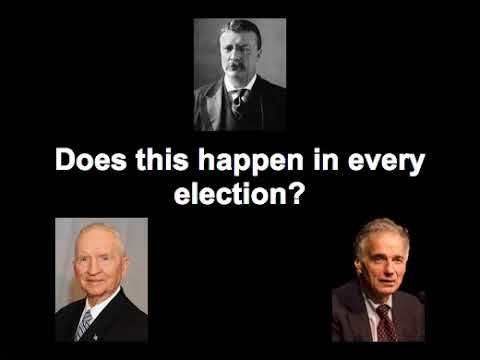 3:35
How our voting system (and IRV) betrays your favourite candidate
35K views • 12 years ago
The Center for Election Science
The Center for Election Science explains favorite betrayal in instant-runoff voting: in some elections, ranking your favorite first can cause your least favorite to win. It contrasts this with plurality voting's spoiler problem.
Topic match · Probability & game theory 13:31
Randomness is Random - Numberphile
893K views • 7 years ago
Numberphile
Numberphile with Simon Pampena on how humans misunderstand randomness, including coin-flip sequences, run lengths and the gambler's fallacy.
Topic match · Probability & game theory 4:07
Why do competitors open their stores next to one another? - Jac de Haan
7.4M views • 14 years ago
TED-Ed
A short animated TED-Ed lesson in which two competing ice cream vendors on a beach illustrate why rival shops cluster together. It introduces game theory and the Nash equilibrium through the Hotelling model.
Topic match · Probability & game theory 57:03
HACKENBUSH: a window to a new world of math
562K views • 5 years ago
Owen Maitzen
Owen Maitzen's animated hour-long introduction to Hackenbush, a simple combinatorial game, and how its strategy leads to surreal numbers and the roots of the number system.
Topic match · Probability & game theory 13:23
Simulating Green Beard Altruism
4.5M views • 5 years ago
Primer
Primer simulates green beard altruism, where individuals recognize and help others carrying a shared marker, and shows how imposters affect its evolution. It is an animated evolution simulation based on published papers.
Topic match · Probability & game theory 17:55
The Fermi Paradox: Dark Forest Theory
412K views • 7 years ago
Isaac Arthur
Isaac Arthur examines the Dark Forest theory, Cixin Liu's proposed solution to the Fermi Paradox in which civilizations stay silent and may destroy any that reveal themselves. He tests the theory's underlying assumptions and arguments.
Topic match · Probability & game theory 6:31
You Can Win the Presidency With 22% of the Vote
8.2M views • 15 years ago
CGP Grey
A short CGP Grey animation showing how the US electoral college lets a candidate win the presidency with as little as about 22 percent of the popular vote. It lays out the arithmetic of winning states by narrow margins.
Topic match · Probability & game theory 15:11
Bayes theorem, the geometry of changing beliefs
6M views • 6 years ago
3Blue1Brown
3Blue1Brown presents Bayes' theorem through a geometric diagram, showing how evidence should update beliefs. It works through the Kahneman and Tversky style questions and base rates.
Topic match · Probability & game theory 23:51
Why is this number everywhere?
12.1M views • 2 years ago
Veritasium
Veritasium explores why the number 37 turns up so often, drawing on Tom Magliery's collection of 37 sightings and a poll of about 200,000 people asked to pick a random number. It covers how humans choose numbers and why 37 stands out.
Topic match · Probability & game theory 2:52
If money was no object, should you run every medical test?
263K views • 8 years ago
Medlife Crisis
A doctor from Medlife Crisis explains in under three minutes why even a rich patient should not simply order every medical test, touching on pre-test probability and Bayesian reasoning. False positives make blanket testing counterproductive.
Topic match · Probability & game theory 19:31
Math Magic
14M views • 10 years ago
Vsauce
Vsauce explores math through card tricks and big numbers, including an animation of how enormous 52 factorial, the number of deck orderings, really is.
Topic match · Probability & game theory 6:23
How We Should Vote (Range Voting)
43K views • 10 years ago
Undefined Behavior
A six-minute explainer from Undefined Behavior on range (score) voting. It follows an earlier video on Arrow's Theorem and shows how range voting seems to satisfy the criteria Arrow's Theorem says no ranked system can.
Topic match · Probability & game theory 14:03
Simulating alternate voting systems
4.5M views • 6 years ago
Primer
Primer uses simulations to compare voting systems such as first-past-the-post, approval, ranked choice and others. It shows how each system behaves and can be manipulated, with links to further voting theory resources.
Topic match · Probability & game theory 3:59
The Lava Lamps That Help Keep The Internet Secure
4.3M views • 9 years ago
Tom Scott
Tom Scott visits Cloudflare's San Francisco office to show the wall of lava lamps whose camera feed is used as a source of entropy for random number generation. It is a short explainer on how this helps secure internet encryption.
Topic match · Probability & game theory 32:11
Darts in Higher Dimensions (with 3blue1brown) - Numberphile
2.1M views • 6 years ago
Numberphile
Numberphile talks with Grant Sanderson of 3Blue1Brown about a darts puzzle with a shrinking bullseye. Solving it takes the volumes of high-dimensional spheres, and the answer turns up Euler's number.
Topic match · Probability & game theory 11:39
The Unbeatable Game from the 60s: Dr NIM
7.2M views • 10 years ago
Stand-up Maths
Matt Parker of Stand-up Maths explains single-pile Nim and the trick that wins it, using Dr NIM, a 1960s mechanical plastic computer that plays perfectly. He teaches the strategy so viewers can beat friends.
Topic match · Probability & game theory 10:26
Crowd Wisdom Principles
11K views • 4 years ago
Hypermind
A ten-minute explainer from Hypermind on the wisdom of crowds, covering Galton's discovery and the diversity theorem. It argues that collective intelligence comes from diversity, independence and aggregation.
Topic match · Probability & game theory 32:32
The Strange Math That Predicts (Almost) Anything
13.1M views • 1 year ago
Veritasium
A Veritasium video on how a feud between Russian mathematicians led to Markov chains and the modern prediction algorithms built on them. It covers the history and the math behind them.
Topic match · Probability & game theory