light table
 19:05
Why No One Has Measured The Speed Of Light
24.3M views • 6 years ago
Veritasium
Veritasium explains why the one-way speed of light has never been measured, only the round-trip speed, since measuring it requires synchronized clocks that assume the answer. It explores the implications for relativity.
 33:33
Longer-lasting light bulbs: it was complicated
2.3M views • 3 years ago
Technology Connections
Technology Connections examines why light bulbs have the lifespans they do, including the real history of the Phoebus cartel. He shows that bulb life trades off against brightness and efficiency rather than being simple planned obsolescence.
 5:55
Richard Feynman talks about light
1.8M views • 19 years ago
sdfhsfh
A PBS clip in which Richard Feynman explains the strange nature of light and electromagnetic radiation. He conveys how little of it we actually see and how radio waves are present everywhere.
 25:21
Old car headlights were all the same — which was a fairly bright idea
2.5M views • 4 years ago
Technology Connections
Technology Connections explains why American cars all had the same standardized sealed-beam headlights until 1957. It covers the regulations behind the design and the effect on night visibility.
 23:47
I Think Faster Than Light Travel is Possible. Here's Why.
3.8M views • 3 years ago
Sabine Hossenfelder
Sabine Hossenfelder explains why she thinks faster-than-light travel may not be ruled out. She argues that the standard objections from special relativity are inconclusive.
 8:14
The Lightning Network Explained (Litecoin/Bitcoin)
119K views • 9 years ago
Franklyn
An 8-minute explainer on the Lightning Network and how it relates to Segwit, Bitcoin and Litecoin. It covers how off-chain payment channels route payments to scale blockchain transactions.
 19:22
LED Christmas lights still annoy me. Let's try some more fixes.
1.2M views • 2 years ago
Technology Connections
Technology Connections complains about the harsh, overly blue color of modern LED Christmas lights and tries more fixes for them. It follows earlier videos by the same creator on holiday lighting.
 18:31
The LED Traffic Light and the Danger of "But Sometimes!"
4.2M views • 8 years ago
Technology Connections
Technology Connections explains how LED traffic lights, which do not melt snow, drew complaints and were blamed for accidents. He uses it to illustrate the 'but sometimes' fallacy against new technology.
 16:30
Why is light slower in glass? - Sixty Symbols
848K views • 13 years ago
Sixty Symbols
Professor Mike Merrifield of Nottingham explains in a mostly uncut conversation why light travels slower in glass. He treats light as a wave and describes how the material's electrons produce secondary waves that combine to slow it.
 12:46
The Speed of Light is NOT About Light
7.1M views • 11 years ago
PBS Space Time
PBS Space Time argues that the speed of light is better understood as the speed of causality, the universal limit on how fast cause and effect propagate. Light travels at that speed because it is massless, but the limit itself is a property of spacetime.
 28:34
But why would light "slow down"? | Visualizing Feynman's lecture on the refractive index
2.9M views • 2 years ago
3Blue1Brown
3Blue1Brown visualizes Feynman's lecture on the refractive index, explaining why light appears to slow down in glass and why the effect depends on color. It builds the idea from waves produced by oscillating charges in the material.
 16:39
Portable Air Conditioners - Why you shouldn't like them
10.4M views • 7 years ago
Technology Connections
Technology Connections explains why single-hose portable air conditioners are inefficient and often a poor choice compared with window units. It details how the single hose pulls in warm outside air and wastes energy.
 13:37
Times Tables, Mandelbrot and the Heart of Mathematics
2.8M views • 11 years ago
Mathologer
Mathologer shows how times table diagrams on a circle produce cardioids and other curves connected to the Mandelbrot set. He explains the patterns and links to a tool for making your own diagrams.
 10:24
Why does light slow down in water?
1.3M views • 7 years ago
Fermilab
Fermilab's Don Lincoln explains why light travels slower in water and glass. He knocks down common wrong explanations such as absorption and re-emission, then gives the wave-mechanics reason tied to refractive index.
 11:57
We all move at the Speed of Light
1.4M views • 8 years ago
ScienceClic English
ScienceClic explains why nothing can go faster than light by treating motion through space and time together, so everything moves at the speed of light through spacetime. It uses animated visuals to cover relativity basics in 12 minutes.
 4:57
Why Heathrow Airport Had Empty Flights to Nowhere
3.1M views • 8 years ago
Half as Interesting
Half as Interesting explains why airlines flew empty 'ghost flights' out of Heathrow to keep their landing slots under use-it-or-lose-it rules.
 21:46
Surface-Stable Fractal Dithering Explained
646K views • 1 year ago
runevision
Rune Skovbo Johansen explains Surface-Stable Fractal Dithering, a technique he invented and released as open source. It makes dithering stick to 3D surfaces and covers the experiments and shortcomings along the way, inspired by Return of the Obra Dinn.
 4:14
Experiment! How Does An Owl Fly So Silently? | Super Powered Owls | BBC
25.7M views • 10 years ago
BBC Earth
A BBC Earth clip from Super Powered Owls in which the team uses sensitive sound equipment to compare owl flight with other birds. It shows why owls fly almost silently.
 10:35
Why the Dutch Wait Less at Traffic Lights
1.2M views • 6 years ago
Not Just Bikes
Not Just Bikes explains how Dutch traffic lights use early detection, transit priority and conflict-free design to cut waiting. The aim is to move as many people as possible rather than as many cars.
 21:40
The LED's Challenge to High Pressure Sodium
1.6M views • 8 years ago
Technology Connections
A Technology Connections video weighing LED streetlights against high pressure sodium lamps, covering efficiency, color, cost and light pollution. It is a follow-up to his earlier explanation of why street lights are orange.
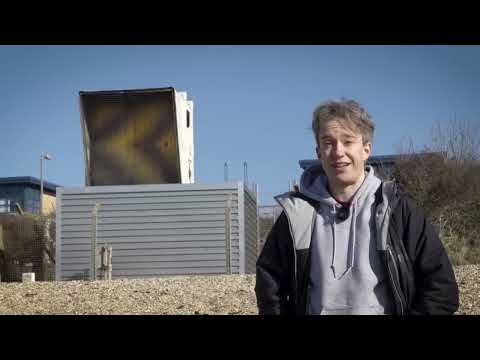 3:54
The moiré effect lights that guide ships home
3.1M views • 8 years ago
Tom Scott
Tom Scott investigates moire-effect beacons, called Inogon leading marks, a Swedish invention from the 1980s that shows different patterns depending on the viewer's position. He visits one used to mark an undersea cable and tracks down its history.
 22:19
The Weird World in RGB
2.7M views • 7 years ago
Technology Connections
Technology Connections explains how RGB light and color work, from hue and saturation to color vision and how objects appear under different lighting. It uses a studio setup with colored lights to demonstrate the effects.
 22:22
Some light quantum mechanics (with minutephysics)
2.2M views • 9 years ago
3Blue1Brown
3Blue1Brown, in collaboration with minutephysics, introduces the math of superposition and quantum states using polarized light. It builds up the quantum behavior of photons as a simple counting and probability problem.
 17:20
The Extreme Engineering of ASML’s EUV Light Source
698K views • 4 years ago
Asianometry
Asianometry explains the EUV light source inside ASML's lithography machines, where lasers hit falling tin droplets twice to produce 13.5 nm light. It walks through the engineering of the droplet generator, the pre-pulse and main laser, and the plasma that results.
 35:07
These Stupid Trucks are Literally Killing Us
7.3M views • 3 years ago
Not Just Bikes
Not Just Bikes explains how SUVs and light trucks have grown in size and share of US sales, and why that is dangerous for pedestrians, cyclists and city life. He covers the regulatory loopholes, such as fuel economy rules and the chicken tax, that favored them.
 10:08
Big Plane vs Little Plane (The Economics of Long-Haul Flights)
4.3M views • 10 years ago
Wendover Productions
Wendover Productions explains why Boeing's efficient 787 beat Airbus's giant A380, contrasting hub-and-spoke with point-to-point routes. It covers the economics of long-haul flights.
 17:30
This is why we can't have nice things
25.6M views • 5 years ago
Veritasium
Veritasium explores planned obsolescence, from the Phoebus lightbulb cartel to printers and phones. It explains how companies deliberately shortened product lifetimes and why products aren't better.
 26:41
Finding the BEST sine function for Nintendo 64
418K views • 3 years ago
Kaze Emanuar
Kaze Emanuar searches for the best sine approximation for the Nintendo 64, comparing the lookup tables in Mario 64 and Ocarina of Time with polynomial alternatives. It walks through numerics and 3rd, 4th and 5th order approximations.
 21:15
The REAL Possibility of Mapping Alien Planets!
778K views • 4 years ago
PBS Space Time
PBS Space Time explains the proposal to use the Sun's gravity as a giant lens, sending a train of small light-sail spacecraft to the focal point roughly 550 AU out. It covers how such a telescope could image exoplanets in surprising detail and the engineering challenges involved.
 28:21
The $100 Billion Dollar Ingredient making your Food Toxic
4.4M views • 5 years ago
Joseph Everett - WIL
A What I've Learned video arguing that industrial seed and vegetable oils have displaced saturated fats and harmed health. It covers the history of vegetable oils, the American Heart Association's role, and rising consumption.
 8:00
Infinity is bigger than you think - Numberphile
7.7M views • 14 years ago
Numberphile
Numberphile's James Grime explains Cantor's result that some infinities are bigger than others, including why the reals outnumber the integers. It is a short, accessible introduction to countable and uncountable infinity.
 24:13
Gaslighting Your Fans w/ Dolby ATMOS™
888K views • 3 years ago
Benn Jordan
Musician and audio engineer Benn Jordan tries Dolby Atmos as a consumer, covering the theory of immersive audio, its business model, and home theater and headphone listening. He concludes it often falls short of the pitch.
 19:59
What Happens at the Event Horizon? | Space Time | PBS Digital Studios
3.2M views • 9 years ago
PBS Space Time
PBS Space Time explains what happens as you approach and cross a black hole's event horizon, using Penrose diagrams and light cones as the tool for understanding spacetime there.
 17:34
The Halo Drive
526K views • 7 years ago
Cool Worlds
Astrophysicist David Kipping presents the halo drive, a proposed way to propel a starship to a good fraction of light speed by gaining energy from a black hole. The video is based on his peer-reviewed paper and explains why energy is the main obstacle to interstellar flight.
 17:32
'Oumuamua Is Not Aliens
790K views • 7 years ago
PBS Space Time
PBS Space Time examines the interstellar object 'Oumuamua and the popular theories about it, including the light-sail hypothesis. It argues that a natural rock is the likeliest explanation.
 14:23
The Long, Twisted And Slightly Ridiculous Story of Avgas Part 1
291K views • 4 years ago
AVweb
AVweb's Paul Bertorelli explains why general aviation has failed to replace leaded avgas, blaming industry inertia, bureaucratic delay and an exemption that removes the incentive. This is part one of two.
 10:56
Tesla Is Lightyears Ahead Of... Tesla
1.4M views • 5 years ago
SuperfastMatt
SuperfastMatt looks at how the Tesla Model S retracting door handles were redesigned over time, from many parts to a motor plus sensor, with a focus on engineering and reliability.
 15:16
The Long, Twisted and Slightly Ridiculous Story of Avgas Part 2
169K views • 4 years ago
AVweb
AVweb's Paul Bertorelli explains in part two of a series why general aviation has not replaced leaded avgas. He covers industry inertia, bureaucratic delays and the exemption that lets the industry keep using lead.
 11:33
Light Waves Visualized using Photon Sieves.
69K views • 6 years ago
Huygens Optics
Huygens Optics shows how DIY photon sieves shape a laser's wave front, explaining how they differ from zone plates and how aperture count affects the focal point, with time-resolved visualizations of the diffraction.
 45:55
Turning Waves Into Particles
194K views • 1 year ago
Huygens Optics
Huygens Optics explores the idea that space is a non-linear elastic medium, and uses simulations to show how wave energy might be confined locally into particle-like objects. It touches on inertia, the Schwinger limit and the vacuum as a medium.